
The lectures and seminars for the second week were all around the theme of “Prototyping and Empathy”.
Fail Fast – Prototyping Methods
We began the first lecture of week 2 by looking at different prototyping methods and Fail Fast systems, something that I had not previously used before. A Fail Fast system is one that immediately reports any issues that are likely to cause a failure further down the line. Fail Fast systems are connected to the “fail fast, fail early, fail often” approach that is popular with tech companies of Silicon Valley and is based upon the idea that in order to discover what works you also need to know what doesn’t. It is considered to be a mantra for some lean or agile approaches to technology development, with the founder of IBM Thomas Watson Jr. saying, “If you want to increase your success rate, double your failure rate” (2014).
Not everyone agrees with the “Fail Fast” approach, Larry Smith, an economics professor at the University of Waterloo University, Canada believes that “Fail Fast” is failing to think deeply and ultimately leads to wasted money (Smith 2014). Personally, I can see both sides of the argument for a “Fail Fast” approach. By taking a fail fast approach to prototyping you take the pressure of needing to get it right the first time; allowing you to experiment without the worry of getting it right the first time and learning from what did and didn’t work. Its particularly useful for working out whether an idea is feasible without sinking a large amount of time, effort, or money into an idea as it gives you a good indication on whether the idea will work long term. However, I do agree with Larry Smith that it can lead to a lack of deep thinking, with a fail fast approach it can be quick to see when an idea isn’t working and rather than develop this further to understand why, it is easy to move on to another idea. The fail fast approach provides the freedom to experiment and try out multiple different ideas, however I do think that if used wrongly this can lead to a failure to think critically and commit to an idea to further develop with can lead to wasted time and resources in the long run. I think the most useful thing about a fail fast process is that it is an iterative process when used correctly. You can continue to test the product, in this case a game, at every step to see what is and isn’t working and build on those successes and failures to create a better and more complex game. I think the fail fast approach will be useful for my future game design process and will be particularly useful for the beginning, prototyping stage as it’ll give me the freed to experiment with different ideas and to learn from what does and doesn’t work.
Methods of Rapid Ideation and Prototyping
Reverse Engineering
- This is the process of extracting insight from existing games as well as researching from books and other theoretical works about game design methods, this is really useful if you want to achieve something that has already been done well by another game, but you don’t know where to start.
- These ideas are then applied to your own work.
- The process of researching and then applying the research to your work is an iterative one; it can be repeated over and over throughout the project to help further develop ideas in light of what you’ve learned from reverse engineering existing games.
- Unpick a process and analyses the design choices:
- Art style:
- Where does it come from?
- What influenced it?
- Narrative:
- How is this driving the experience of the game?
- How does this work?
- What is happening that makes you associate meaning with it?
- Sound Effects:
- How are those sound effects triggered?
- What makes them, both on-screen and in a recording studio?
- How do they evolve?
- How do they change or convey the emotion of the game?
- Art style:
When it comes to prototyping the build quality and appearance of the prototype don’t matter, what does matter is whether the prototype effectively conveys the idea you are exploring. The majority of prototypes as built from found materials and thrown together as quickly as possible in order to allow for an idea to be tested so that an idea can be further developed.
Paper-Based:
- Allows you to quickly mock-up a game and to test its mechanics like a board or card game. Interactions can also be mocked up by moving or layering paper and using elements like dice to create elements of choice and randomness.
Wireframe:
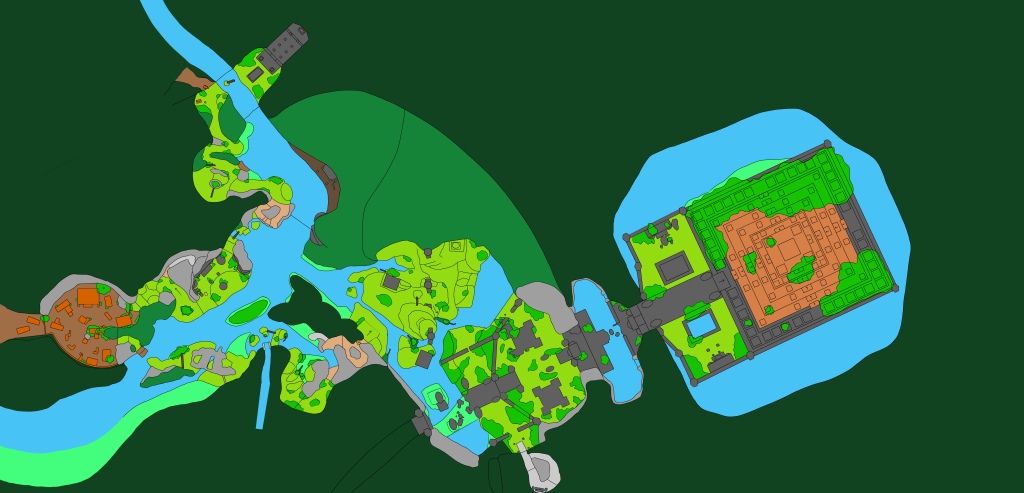
- A visual guide that represents the skeletal framework of an app or game. It allows you to be creative and to explore the flow of information and interactions on paper.
Narrative Map:
- This allows you to branch the narrative and to explore the different directions the game could proceed in. Tools like twine can be used to achieve this. Even if a game is not really a narrative one this kind of structure can be useful for working out its choice structure.
Mixed Materials:
- If paper alone isn’t enough to prototype your game, then you can use materials like figurines, Lego, stickers, or electronic items as stand-ins for other elements in the game.
On-Screen Mock-ups:
- A variety of online and desktop tools can be used to take an idea onto a computer and explore simple button clicks and animations to further realise a prototype. These are particularly useful for steeping between different screens and understanding how the flow of things in a game work. This is used a lot in the UX industry, particularly for web development.
In Engine Mock-up:
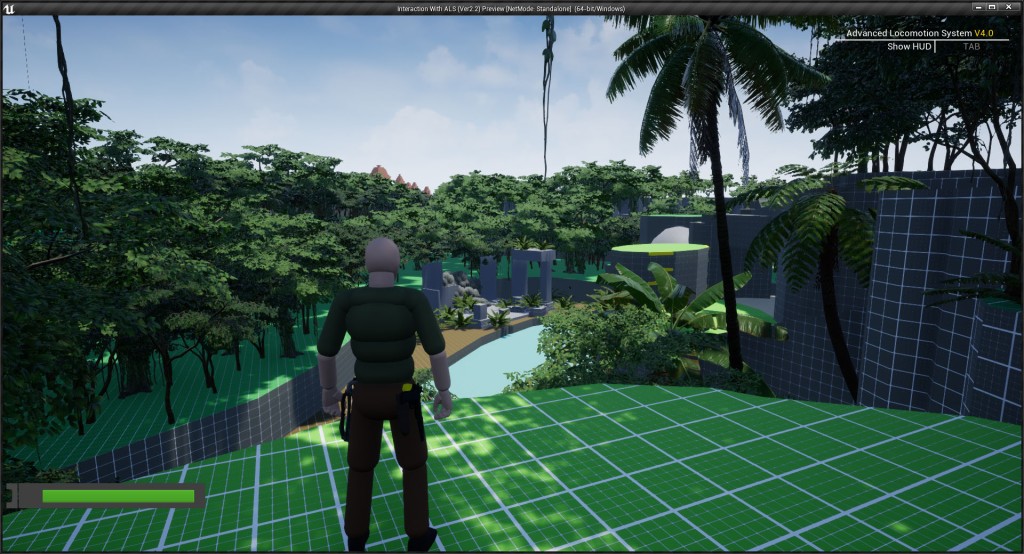
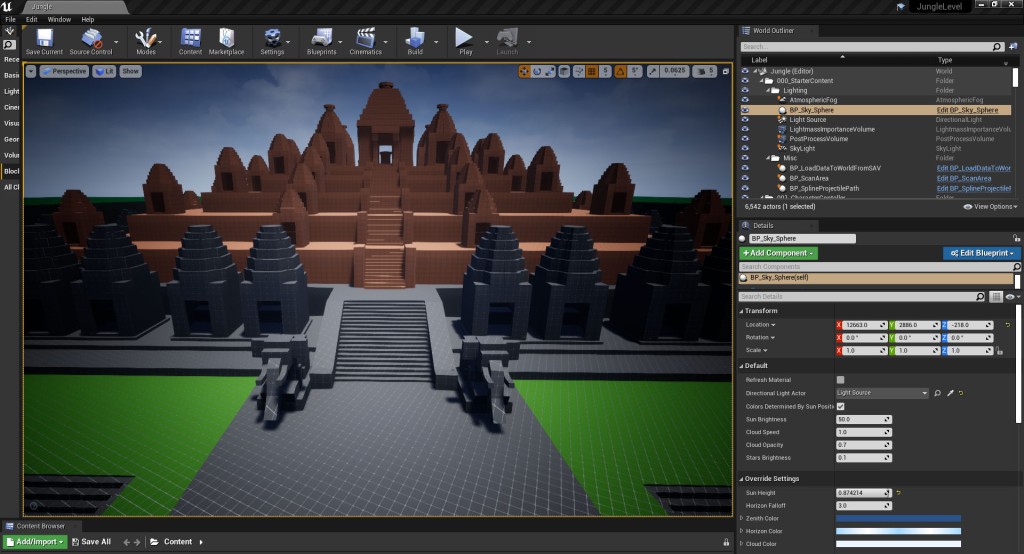
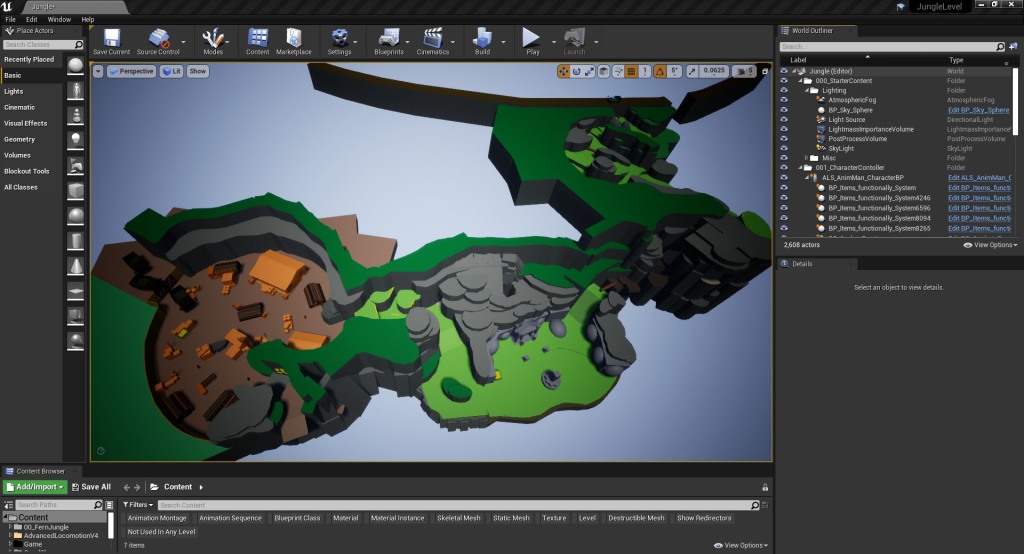
- This is the final step of prototyping that all the other types of prototyping are moving towards; you need to start with one of the earlier prototyping methods first before moving on to in-engine mock-ups. In-engine mock-ups are when an idea is finally brought into a game engine, and you use primitives and off-the-shelf models to build a crude version of your game. It is at this stage that actually inputs can be developed and tested. This is often referred to as white or grey boxing or a level block out as the shapes used are often grey or white, though they can also be basic colours and often feature a grid texture to help designers read the scale of the block out.
I found the lecture really insightful as I haven’t made a game before, and it was really helpful to learn about how you take an idea and start the process of turning it into a game. I am excited to try out some of these prototyping methods over the course of my Masters.
“I have not failed. I’ve just found 10,000 ways that won’t work”
Thomas Edison
References:
COLE, Samantha. 2014. ‘Quote of The Week: Double Your Failure Rate’. Fast Company [online]. Available at: https://www.fastcompany.com/3033003/quote-of-the-week-double-your-failure-rate [accessed 29 September 2021].
SMITH, Larry. 2014. Part 2: Why “Fail Fast, Fail often” is Wrong | TEDtalks speaker Larry Smith | AQ’s Blog and Grill [YouTube user-generated content]. Available at: https://www.youtube.com/watch?v=fECslSxpQFM [accessed 29 September 2021].
 Fern Griffiths
Leave a comment