This week was called “System Love” with the focus being on systems and communities; looking at the ways that they can influence our creative practice as game designers. Systems can be used both as creative sources and as pragmatic methodologies for organising the world around us.
We started by looking at “Multiplicities” which are complex structures that don’t reference prior unity and is a philosophical theory by the French philosopher Gilles Deleuze. He argues that in nature there are no boundaries between domains and that all things are moving away from and merging into everything else in increasing levels of complexity. When looking for sources of inspiration there are multiplicities of starting points from which to begin planning a new project. Deleuze states that these starting points break off in your mind to become a series of more concrete thoughts that consolidate to become visions or ideas to create, something which Deleuze refers to as “the Virtual”. The virtual only becomes a real and tangible experience if it can be organised and defined.
Humans, as a species like to put things into categories, the science of categorisation is called Taxonomy and it is the placing of things into domains based upon their form and function. Games also make use of taxonomies as, though games are complex systems; they are also binary ones and taxonomies help games to achieve their binary outcomes. An excellent example of systems and taxonomies being utilised in games are the Sims Universe (2000-) games by Will Wright that simulates the creation of an American City through the eyes of a city planner. The Sims games are great examples of the way that games attempt to simulate experiences and systems and try to represent reality in novel ways. Games by their very nature are closed systems and in order to be able to build games, it is important to love systems.
Systems are structures created to define and organise, in video games multiple systems work together as part of a mechanism or interconnecting network to create a complex whole which is all about giving the player control. When designing systems for a game the real world is the primary source of inspiration, and it is important to consider the following questions:
- How does a system work in the real world?
- What can and cannot happen in this system?
- How can we subvert its real-world rule set?
The systems and processes that are all around us are rich source materials for games. They can be directly replicated in ever-increasing fidelity when striving for hyperrealism. You can also make a system or process and invert expectations and use a game’s ability to offer unique perspectives to upend everything and challenge the centrality of humans in the multiplicity of earth systems. When looking at games they can be reverse-engineered into the systems that inspired them, for instance, Battlefield V (2018) is based upon the military system, in particular, WW2 while Tell Me Why (2020) series which focuses on the system of families while combining it with mystery solving. Systems are everywhere and even small, mundane systems can be used to inspire a game; such as paper-pushing jobs which went on to inspire the game Papers, Please (2013).
The conclusion from this lecture on systems was that as a species we use systems to categories and contain the multiplicity of experiences in the world around us. Systems exist in all aspects of our cultures and are highly important for game design. Through reverse engineering and Deleuze’s Taxonomy, there is a rich variety of inspiration for game designers to explore with games offering the unique ability to explore the world through perspectives other than humans. The lecture finished by setting a task to look into two systems that would form the foundation of our next game sprint. This lecture left me feeling excited for the next game sprint but slightly unsure of where to start with researching the two systems. As I am new to game development, I was conscious of what I would be able to create in the time given and didn’t want to pitch an idea that wouldn’t do doable in the time given.
TASK 1: Research two “systems”. Prepare written and visual or even audio material to illustrate your research and thinking from two systems:
- Cultural or Societal – This refers to systems in our environment some of which are explored in the lecture, but you should use this as inspiration rather than prescription. These could be systems of government, religion, natural, political, or cultural systems that you want to use as a theme for your next sprint.
- Technical or Aesthetic refers to systems of production. Whether it is researching an artist or movement or an engineer, designer, or field of science to understand a process that you are passionate about deep diving into.
When thinking about what two systems I wanted to explore I decided to list possible lines of research for each system.
Cultural or Societal
- Coffee Shop Culture
- Military Culture
- Monarchy
- British Folklore
- Nordic Folklore
Technical or Aesthetic
- Walking Simulator
- Puzzle Mechanics
- Interactive Mechanics
- Cinematic
- Environmental Storytelling
While I like a few of the Cultural systems I had listed for the one I decided to develop further were the British Folklore as it would allow me to pick a specific story that would provide the constraints for the project. British folklore has a rich, variety of stories the most famous and popular are the tales are of King Arthur. The tales of King Arthur are based upon multiple different systems, but the most popular versions are based upon the System of Sovereignty, one of Deleuze’s 3 systems of society. The System of Sovereignty, which covers the medieval period from the 5th to the 18th century is one of the most popular inspirations for games as the hierarchy and punitive nature of the medieval system lends itself readily to the winner takes all nature of a lot of games. I felt that going with the medieval, romanticised version of King Arthur, made popular by T.H. Whites Once and Future King (1958/2008), was the best version to go with as it is the most famous and easily recognisable. Players hate having things explained to them when they could experience it in the world of the game instead as a lot of the pleasure that comes from playing games is being able to work things out for themselves based off a player’s own knowledge (Smith and Worch 2010). By going with the most popular, and well-known version of King Arthur would also limit the amount of work needed to convey the setting to the player as it is easily recognisable.
Having decided on a Cultural system my next step was to decide on a technical system. As I only made my first game last week, there were quite a few different techniques that I would like to explore, however, I was very aware that this task was the preparation work for the next game sprint and that we would only have a week to complete the game in. Being aware of the scope, what would be possible to create within the time given, I decided that the best two technical systems to consider were Walking Simulator or Environmental Storytelling. I realised that the two techniques were actually closely linked, with the technique of environmental storytelling easily being used in a walking simulator to provide narrative without the need for words.
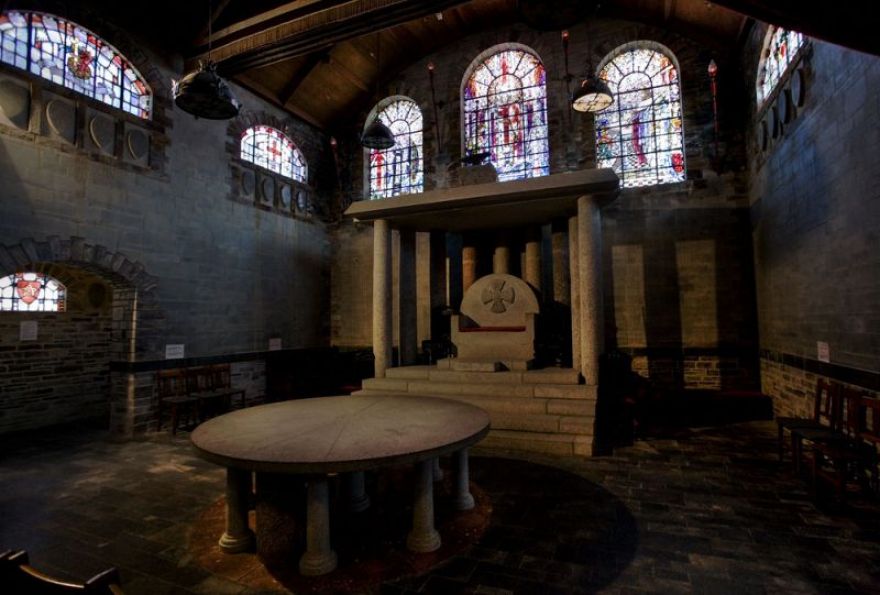
Fig. 1:Cornwall Guide. n.d. King Arthur’s Great Halls // Tintagel.
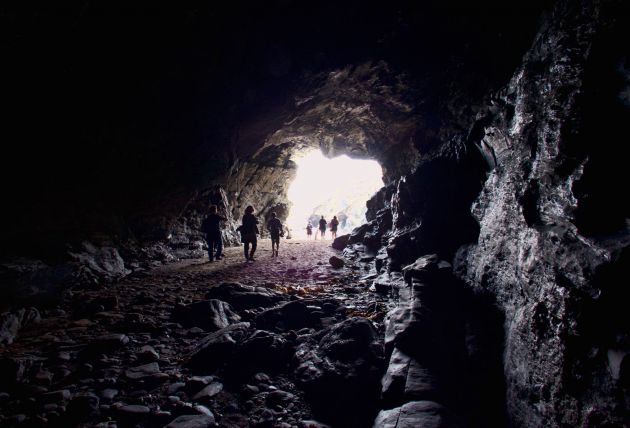
Fig. 2:Cornwall Guide. n.d. Merlin’s Cave.
With both systems decided I moved on to form the idea for the pitch. As I wanted to explore an environment related to King Arthur, I decided to come up with some interesting locations which are closely linked with the stories and would be easily recognisable to the player. Being in Cornwall one of the first places I thought of was Tintagel Castle. Tintagel Castle has a long history of being linked with King Arthur and Merlin with an interpretation of King Arthur’s Great Hall being designed and built in the 1930s in the town of Tintagel to “encapsulate the world and legend of King Arthur” (Cornwall Guide n.d.). The castle of Tintagel also features a 100-meter sea cave that has become known as “Merlin’s Cave” (Cornwall Guide n.d.) with the legend of King Arthur and the wizard Merlin being linked with Tintagel since Geoffrey of Monmouth wrote his book Historia Regum Britanniae written around 1136 (Geoffrey, Reeve and Wright 2007). I feel that these two locations, Arthur’s Great Hall, and Merlin’s Cave both offer excellent starting points for building an environment for a walking simulator that would explain the narrative to the player through their own exploration. I think this idea of a walking simulator based upon the legend of Arthur will not only be interesting to play but technically interesting and challenging to create. I haven’t scripted gameplay before, and this project would provide the opportunity for me to start developing skills in visual scripting which is one of my goals for this course. I will take these two ideas forward to the workshop session and see if anyone is interested in developing this idea further. I am excited to pitch this idea as well as hear the ideas from the rest of the class and start working on the next game sprint.
“Art is not communicative; art is not reflexive. Art, science, philosophy are neither contemplative, neither reflexive, nor communicative. They are creative, that’s all.”
Gilles Deleuze
References:
BRITANNICA. n.d. ” King Arthur” Britannica [online]. Available at: https://www.britannica.com/topic/King-Arthur [accessed 12 October 2021].
CORNWALL GUIDE. n.d. “King Arthur’s Great Halls // Tintagel”. Cornwall Guide [online] Available at: https://www.cornwalls.co.uk/attractions/king-arthurs-great-halls.htm (accessed 12 October 2021)
CORNWALL GUIDE. n.d. “Merlin’s Cave”. Cornwall Guide [online] Available at: https://www.cornwalls.co.uk/tintagel/merlins-cave 12 October 2021)
GEOFFREY, of Monmouth. Michael D. REEVE and Neil. WRIGHT. 2007. Geoffrey of Monmouth, the History of the Kings of Britain: An Edition and Translation of de Gestis Britonum [Historia Regum Britanniae] Woodbridge: Boydell & Brewer.
WHITE, T. H. 2008. The Once and Future King (1958). London: HarperCollins Children’s.
SMITH, H. and M. WORCH. M. 2010. GDC – What Happened Here? – EnvironmentalStorytelling. [Industry Conference]. Available at: https://www.gdcvault.com/play/1012647/What-Happened-Here-Environmental
Games:
Battlefield V. 2018. DICE, Electronic Arts.
Papers, Please. 2013. Lucas Pope, 3909 LLC.
Tell Me Why. 2020. Dontnod Entertainment, Xbox Game Studios.
Sims. 2000-. Maxis, Electronic Arts.
List of Figures:
Figures 1: CORNWALL GUIDE. n.d. “King Arthur’s Great Halls // Tintagel”. Cornwall Guide [online image] Available at: https://www.cornwalls.co.uk/attractions/king-arthurs-great-halls.htm (accessed 12 October 2021)
Figure 2: CORNWALL GUIDE. n.d. “Merlin’s Cave”. Cornwall Guide [online image] Available at: https://www.cornwalls.co.uk/tintagel/merlins-cave 12 October 2021)
 Fern Griffiths
Leave a comment