CHALLENGE: Write an ethnography report, that is based on a ‘participation observation’. This week’s activity borrows heavily from the field of social anthropology.
According to discoveranthropology.org.uk:
“Social anthropologists conduct their research in many ways, but the method most characteristic of the discipline is that of fieldwork based on ‘participant observation’. This usually means spending a long period (a year or more) living as closely as possible with the community being studied; learning the language if necessary; sharing the activities of daily life; observing and participating in the texture of social interactions, and identifying underlying patterns. Through analysing this experience and exchanging ideas with members of the community, the anthropologist aims to gain a deep understanding of how the society works, including its inherent tensions and contradictions. Social anthropologists usually report their research in the form of ‘ethnographies’, which are detailed descriptions of the society in question.”
Crunch Culture is now the open secret of the Games Industry and the reason for studios like Rockstar, Naughty Dog, and CD Project Red are in the news but for the wrong reasons. With the release Cyberpunk 2077 (fig. 1.) in September 2020 once again reopened the discussion around Crunch Culture in the Gaming Industry. The game, which faced multiple delays still featured multiple bugs and was unplayable on last-generation consoles (Thomas 2021), has become synonymous with the issues around crunch. But what is Crunch Culture? Crunch Culture is a term that refers to having to work long, intensive hours in order to make sure a game is ready by its release. It is often a result of studios being unable to delay the release of a game due to publicly announcing a release date but needing additional time on top of normal work hours to complete the game.

In an interview from 2012 legendary Game Design Miyamoto said, “A delayed game is eventually good, but a rushed game is forever bad”. While games like Red Dead Redemption 2 (2018) and The Last of Us Part 2 (2020) has proven that this isn’t always the case; with both games picking up multiple rewards at release, the sentiment is still a poignant one. Cyberpunk 2077 is an example of the buggy mess and disappointment that can happen as a result of having to release a rushed game. Cyberpunk did attempt to prevent crunch by previously delaying the game multiple times (Hall 2020), in the same way, that Red Dead Redemption 2 was also delayed multiple times (Schreier 2018), but in both cases, crunch still happened.
Back in 2019 a year before Cyberpunk was released the student manager, Marcin Iwiński, was quoted as saying “We’re known — let me be humble for a moment here — we are known for treating gamers with respect… And I actually would [like] for us to also be known for treating developers with respect.” He went on to say that while long hours would be allowed it would not be mandatory, something that he termed as “non-obligatory crunch policy” (Hall 2020). However, by September 2020, five months after the initial release the studio’s chief executive Adam Kicinski (Good 2020) admitted that unfortunately, the studio would have to rely on crunch to be able to deliver on time. An article from Bloomberg reported that the staff faced mandatory six-day weeks in the run-up to the release of the game (Schreier 2020). The article went on to suggest that the game developers knew that the game wasn’t ready for launch and that the deadlines set by the board of directors were always going to be unrealistic and unachievable (Schreier 2020).
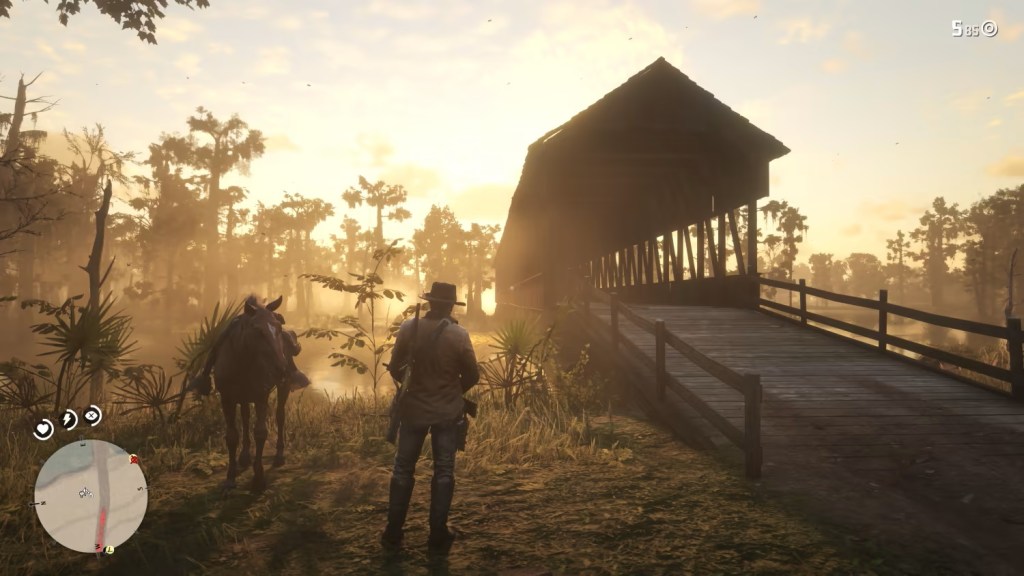
So, is crunch just a matter of poor planning and over scoping? This might have been the case for games like Cyberpunk and Red Dead Redemption 2. While the release of Cyberpunk was met was disappointment and frustration, the release of Red Dead Redemption 2 (fig. 2.) was met with universal acclaim, with Metacritic rating it 97/100 (Metacritic 2018). However, a few weeks after the release the game sparked controversy after the co-founder and co-creative lead of the game, Dan Houser, was quoted saying that they worked “100-hour weeks” (Goldberg 2018). Crunch and these types of hours are not unusual, with them being a common occurrence in the last few years of development for Rockstar’s games. Rockstar’s Co-Founders Dan and Sam Houser are famous for “rebooting, overhauling and discarding large chunks of their games” (Schreier 2020) to achieve the best possible result, with Red Dead Redemption 2 being no exception. This desire, of wanting to create increasingly better games is the same reason that The Last of Us Part 2 got delayed and then ultimately ended in crunch. At the time of the delay, creative director Neil Druckmann stated that the delay was because the game wasn’t at the quality that the studio is known for and that the “size and scope of this game got the better of us” (Druckmann 2019). As studios strive to create bigger and better games the extra hours’ required need to come from somewhere, and often this comes in the form of crunch rather than delays.
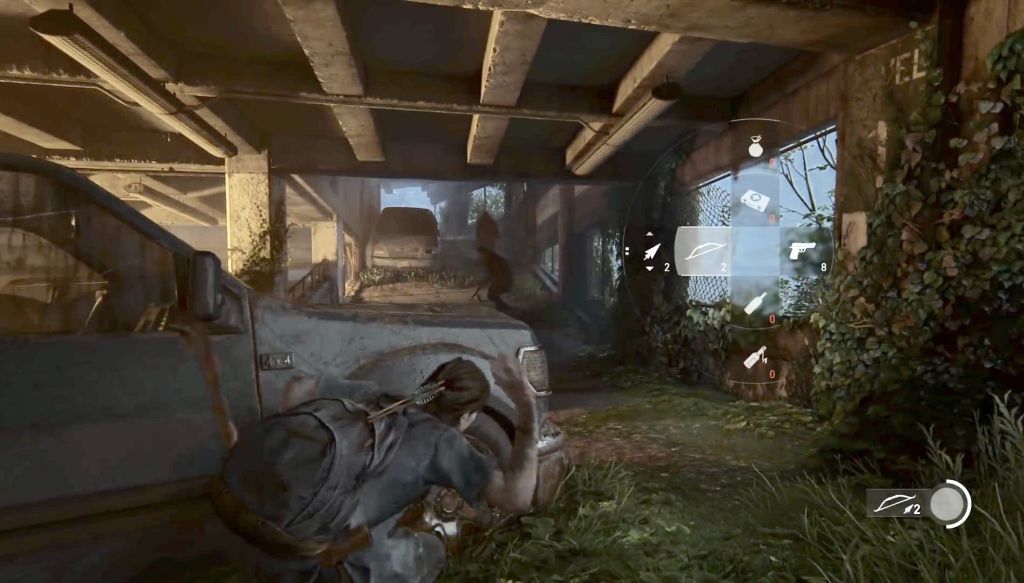
But can Crunch time ever really be avoided? The director of The Last of Us Part 2 (fig. 3.) Neil Druckmann says that the answer is “No” (Plant 2021). It’s not like Naughty Dog decided to go straight into crunch, the game was delayed by 5 months, but crunch still happened. In an interview with IGN (Plant 2021), Druckmann stated that the issue with crunch is that there’s no one size fits all solution for crunch. He says that in the past they have discussed ways of limiting crunch by setting a strict limit of 40 hours of work before the server shuts you out or mandator work hours but these solutions always end up leaving someone behind or frustrating people who want to spend longer polishing their work. These comments drew major criticism from some but also defence from others. Naughty Dog Environment Artist Anthony Vaccaro defended the studio on Twitter in a series of tweets saying that both leadership and employees have been putting a “dramatic” amount of effort into finding multiple solutions for crunch and studio culture. He goes on to agree with Druckmann to say that solutions to crunch need to be individual and that it is a difficult process of finding the balance that allows devs to push for things they are passionate about without resulting in crunch (Vaccaro 2021).
As Game Developers get more and more ambitious, and the fans expect more from the games, crunch culture may never go away entirely. Attempting to finish a game without crunch should always be the aim and it is possible to create games without crunch as the recent Ratchet and Clank: Rift Apart (2021) game proved (Bailey 2021). However, sometimes a few weeks crunch is needed to finish a great game and often employees are willing to work long hours because of their passion for the games they are making. But when crunch is mandatory or extends for long periods of time, studios need to be stepping up to find solutions around this. A way around this may be to not set a release dates until the game is closer to completion and there is less of a chance of needing to public delay a game; all three of the games I have talked about had to delay their release and still ended up with crunch at the end of their production. By setting release dates the studios set themselves a deadline that ultimately became unachievable, causing them to face increased pressure from the studio executives and the fans. Not setting a release date till the game is almost finished may reduce a studios effectiveness of being able to build hype but if it results in a better-finished product and no crunch then it may be an option studios have to start exploring moving forward.
“We all make choices in life, but in the end our choices make us.”
Andrew Ryan – Bioshock (2007)
References
BAILEY, Kat. 2021. “Ratchet and Clank Devs Take to Twitter to Praise What They Say is Lack of Crunch at Insomniac” IGN [online]. Available at: https://www.ign.com/articles/ratchet-and-clank-insomniac-no-crunch-ps5-news [accessed 16 October 2021]
DRUCKMANN, Neil. 2019. “The Last of Us Part II Comes to PS4 in May June 19: An update from the game’s director.” PlayStation [online]. Available at: https://blog.playstation.com/2019/10/24/the-last-of-us-part-ii-comes-to-ps4-in-may/ [accessed 16 October 2021]
GOLDBERG, Harold. 2018. “How the West Was Digitized: The making of Rockstar Games’ Red Dead Redemption 2.” Vulture [online]. Available at: https://www.vulture.com/2018/10/the-making-of-rockstar-games-red-dead-redemption-2.html [accessed 16 October 2021]
HALL, Charlie. 2020. “Cyberpunk 2077 has involved months of crunch, despite past promises” Polygon [online] https://www.polygon.com/2020/12/4/21575914/cyberpunk-2077-release-crunch-labor-delays-cd-projekt-red [accessed 16 October 2021]
MIYAMOTO, Shingeru. 2012. Interviewed by Simon PARKER in The Guardian [online]. Available at: https://www.theguardian.com/technology/gamesblog/2012/apr/27/shigeru-miyamoto-rushed-game-forever-bad [accessed 16 October 2021]
PLANT, Logan. 2021. “’No One Solution’ For Naughty Dog Crunch, Neil Druckmann Says” IGN [online]. Available at: https://www.ign.com/articles/naughty-dog-leaders-discuss-crunch-tlou2 [accessed 16 October]
SCHREIER, Jason. 2018. “Inside Rockstar Games’ Culture of Crunch” Kotaku [online] Available at: https://kotaku.com/inside-rockstar-games-culture-of-crunch-1829936466 [accessed 16 October 2021]
SCHREIER, Jason. 2020. “Cyberpunk Game Maker Faces Hostile Staff After Failed Launch” Bloomberg [online] Available at: https://www.bloomberg.com/news/articles/2020-12-18/cyberpunk-game-maker-faces-hostile-staff-after-failed-launch [accessed 16 October 2021]
THOMAS, Alexander. 2021. “The Cyberpunk 2077 Release Disaster’s Silver Lining.” Screen Rant [online]. Available at: https://screenrant.com/cyberpunk-2077-release-disaster-good-industry-cd-projekt-red/ [accessed 16 October 2021]
VACCARO, Anthony. [@vaccaro3d]. 2021. Crunch Culture at Naughty Dog by 2021. August 29 [Twitter Thread] Available at: https://twitter.com/vaccaro3d/status/1432049774685933572?s=20 [accessed 16 October 2021]
Games
Cyberpunk 2077. 2020. CD Project Red. Sony Interactive Entertainment.
The Last of Us: Part Two. 2020. Naughty Dog, Sony Interactive Entertainment.
Red Dead Redemption 2. 2018. Rockstar Game, Sony Interactive Entertainment.
Ratchet and Clank: Rift Apart. 2021. Insomniac Games. Sony Interactive Entertainment.
Figures
Figure 1. Cyberpunk 2077. 2020. CD Project Red. Sony Interactive Entertainment.
Figure 2. Red Dead Redemption 2. 2018. Rockstar Game, Sony Interactive Entertainment.
Figure 3. The Last of Us: Part Two. 2020. Naughty Dog, Sony Interactive Entertainment.
 Fern Griffiths
Leave a comment