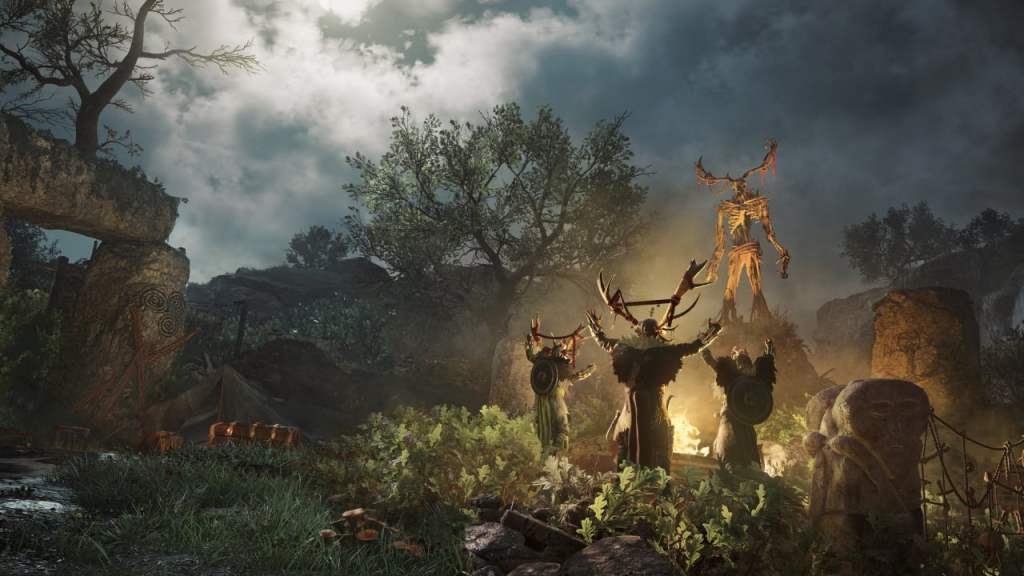
My initial idea for this project has changed since I originally came up with it. Rather than using folklore as a whole, I will be focusing on a single area of folklore, specifically Celtic/Gaelic folklore. I considered looking at European folklore as a whole, as many countries within Europe have similar folklore, but this was still too large as while the folklores found within Europe are similar there as some very clear and distinct differences. I have decided to go with Celtic/Gaelic folklore as I don’t feel it gets the recognition or understanding it deserves. From my research into folklore within video games, it is clear that Nordic folklore is the most common influence for games inspired by European folklore, with game franchises like God of War (2018) and Assassins Creed (2020) using Norse folklore and mythology as inspiration for their most recent releases. While Celtic/Gaelic folklore is used alongside Norse in both of these games, it is used to inspire additional enemies for the player to fight and in the case of the Wulver in God of War, the final interpretation is completely different to the original source inspiration. As my game is exploring the idea of peaceful interaction with the creatures of folklore, I feel using Celtic/Gaelic Folklore as inspiration will be an interesting route to go down as the creatures of Celtic/Gaelic folklore are often interpreted wrong in video games and used as inspiration for enemies that the player must fight.
Alongside having decided to focus on Celtic/Gaelic folklore for the project I have also decided to reduce the scope of the project down to a simple point and click game so that I can focus more of my time on the experimental aspect of my project. I have decided that I will experiment with two areas of the project, the first area will be the topic and the second area will be the art style. For the topic, I will be exploring the way that the creatures of Celtic/Gaelic folklore can be used in a peaceful way rather than as inspiration for enemies. As these creatures have often been wrongly typecast as dangerous monsters to fight I will also be experimenting with the topic of stereotyping and prejudice within the narrative in an attempt to encourage others to think about the ways they judge people based upon appearance or the stories they have been told. Since Celtic/Gaelic folklore is often closely related to nature I considered exploring the topic of conservation within the narrative. However, I decide on the topic of stereotypes and prejudice as a result of my research that showed that the creatures of folklore, particularly in the games industry, are often presented as onside monsters with their sole purpose as enemies to fight.
The second area of experimentation will be with the art style. While folklore lore is a common inspiration for videogames none of the games I looked at used an art style that closely relates back to the topic. I feel that it would be really interesting, and help make it clear that this game isn’t about killing monsters, to use an art style that has been influenced by folk art and the tales of folklore. For this area of experimentation, I will research paper cut art, Celtic art and folklore illustrators to develop an art style that matched the theme of the game.
“Game design isn’t just a technological craft. It’s a twenty-first-century way of thinking and leading”
Jane McGonigal (2011)
References:
MCGONIGAL, Jane. 2011. Reality Is Broken: Why Games Make Us Better and How They Can Change the World. London: Jonathan Cape.
Games:
Assassins Creed: Valhalla. 2020. Ubisoft Montreal, Ubisoft.
God of War. 2018. Santa Monica Studio, Sony Interactive Entertainment.
 Fern Griffiths
Leave a comment