For the art style, I have decided to explore Folktale Illustrations, Celtic Art and Paper-Cut Art. I feel that the style of cut paper will fit nicely with the theme of folklore and folktales, creating the feeling of an illustrated picture or pop-up book. To keep with the Celtic folklore theme I will be taking inspiration from Celtic art which I will combine with the Paper Cut art style to create a folktale inspired art style.
Celtic Art
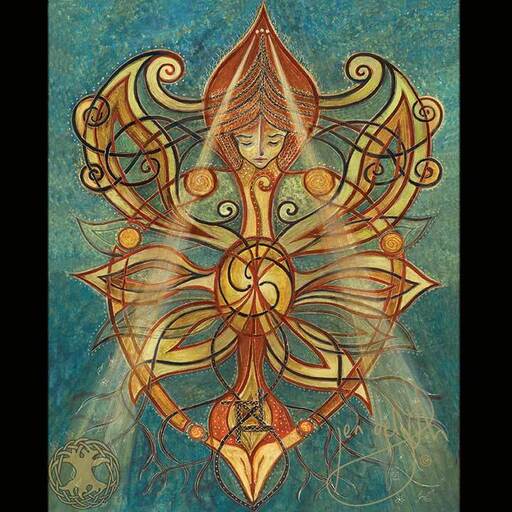
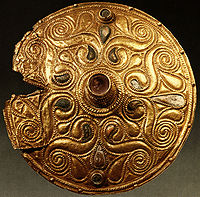
As an art style, Celtic Art is made up predominantly of geometric shapes, with spirals and circular forms seen throughout. Celtic Art is often ornamental and easily recognisable from its nonlinear, geometric design (Goldberg 2015. Cartwright 2021). Celtic Art often featured depictions of animals and was used to convey stories which is why I will be taking inspiration from it for the art style of the game. The Celtic arts saw a revival in the 19th and 20th alongside a revival of interest in folklore, folk tales ad folk music. As Celtic art and folklore are so closely connected I feel it would be wrong to not use Celtic art as an inspiration.
Paper Cut Art
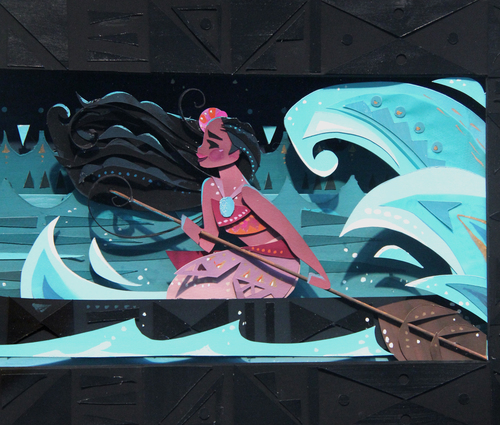
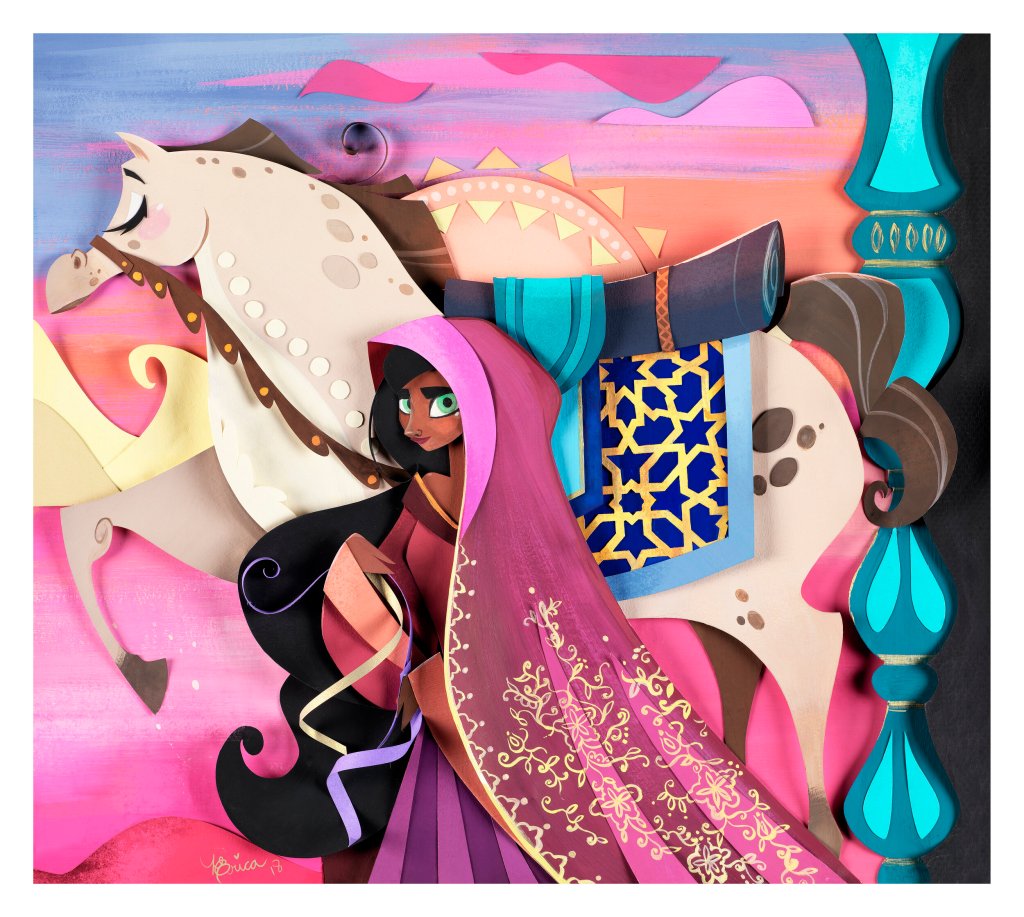
The second area of inspiration for the art style comes from Paper-Cut Art, also known as Quilling. Like many forms of craft, paper quilling can trace its origins back hundreds of years to around the 15th century and is believed to have been created by nuns who used the technique to decorate religious objects in an effort to save money. The paper was fashioned to mimic carved ivory and wrought iron which were very costly details. Once the paper was gilded, it was hard to distinguish from actual metal which is why many struggling churches used it as a cheaper substitute. The art form had its heyday in England during the 18th century. In addition to embroidery, it was considered an expectable and proper pastime for young women and was taught in boarding schools, as well as to “ladies of leisure” because it was seen as not too “taxing” for them. Quilling’s influence spread to the United States, but the practice waned in popularity by the 19th century (Quilling Guild n.d).
Paper quilling has seen a recent rise in popularity as a new generation of creatives have rediscovered the art form. Though still used in traditional ways, many like Brittney Lee and Nathanna Erica are modernising the art style. Both Lee’s and Erica’s work has helped the art style to increase further in popularity in reason years due to their work with Disney. As an art style, I feel it captures the feeling of a storybook and which is why I am using it as inspiration for the art style. I really like how Lee’s and Erica’s modern take on the style have been used in conjunction with the stories of Disney animation and feel they will be great inspirations for the art style of my game, allowing it to have a folk tale feel with a modern twist.
Folktale Illustrations
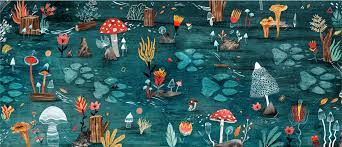
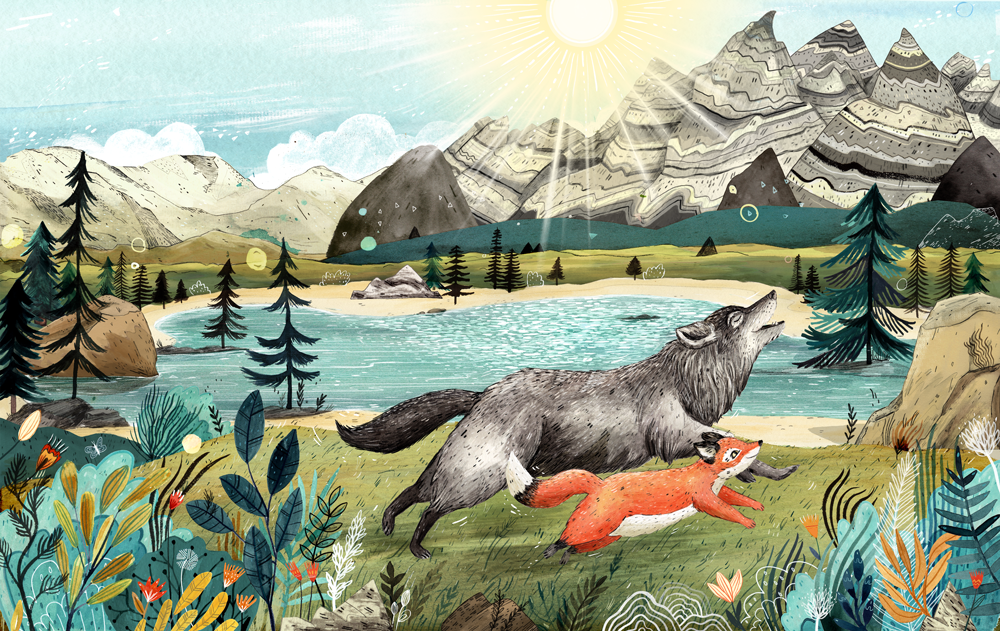
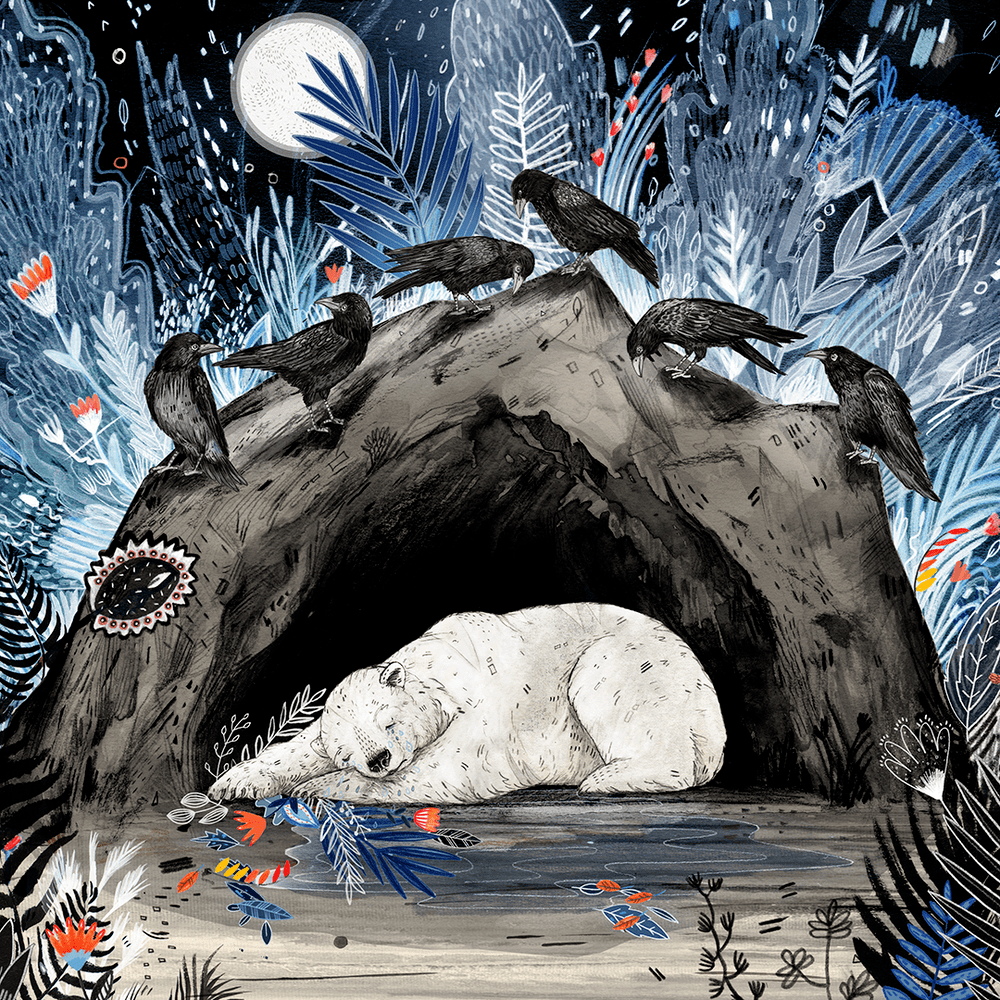
The final area of inspiration for the art style is illustrators of folktales. As this is not an established art style, but refers more to the many different types of artist that have illustrated books on folklore I have chosen a specific artist for this area of inspiration. After researching different illustrators and artist I have choose to use the work of Sandra Dieckmann as my third source of inspiration. Dieckmann’s work is heavily inspired by nature and the folktales she read growing up. I really loved her use of colour, with her illustrations capturing the richness of folklore while still capturing folklore’s darker edge.
“Folk art is, indeed, the oldest of the aristocracies of thought, and because it refuses what is passing and trivial, the merely clever and pretty, as certainly as the vulgar and insincere, and because it has gathered into itself the simplest and most unforgettable thoughts of the generations, it is the soil where all great art is rooted. Wherever it is spoken by the fireside, or sung by the roadside, or carved into the lintel, appreciation of the arts that a single mind gives unity and design to, spreads quickly when its hour is come.”
William Butler Yeats (2004)
References:
CARTWRIGHT, Mark. 2021. “Ancient Celtic Art” World History Encyclopaedia [Online]. Available at: https://www.worldhistory.org/Ancient_Celtic_Art/ [accessed 13 February 2022].
DIECKMANN, Sandra. n.d. “Sandra Dieckmann: Work” Sandra Dieckmann [online]. Available at: http://www.sandradieckmann.com/work [accessed 13 February 2022].
ERICA, Nathanna. n.d. “Paper Art Miscellaneous” Nathanna Erica [online] Available at: https://nathannaerica.com/paperartmisc [accessed 13 February 2022].
GOLBERG, Martin. 2015. “Early Medieval Celtic Art in Britain and Ireland: A Curator’s Perspective.” Medievalists.net [online]. Available at: https://www.medievalists.net/2015/11/early-medieval-celtic-art-in-britain-and-ireland-a-curators-perspective/
LEE, Brittney. n.d. “Britsketch” Instagram [online]. Available at: https://www.instagram.com/britsketch/?hl=en [accessed 13 February 2022].
QUILLING GUILD. n.d. “The history of Quilling” Quilling Guild [online]. Available at: http://quilling-guild.weebly.com/the-history-of-quilling.html [accessed 13 February 2022].
Figures:
Figure 1: Bridhid’s Mantle, Fine Art Print by Jen Delyth.
Figure 2: Disc brooch, France, 4th century BC
Figure 3: Paper Cut Art by Brittney Lee
Figure 4: Paper Cut Art by Brittney Lee
Figure 5: Illustration by Sandra Dieckmann
Figure 6: Illustration by Sandra Dieckmann
Figure 7: Illustration by Sandra Dieckmann
 Fern Griffiths
Leave a comment