This week I spent the time blocking out the first few sections of the map, the start area, the spiral path and cave and the first small temple area. These first couple of sections have been relatively straightforward to blockout as they are mostly comprised of a single path and a single district.
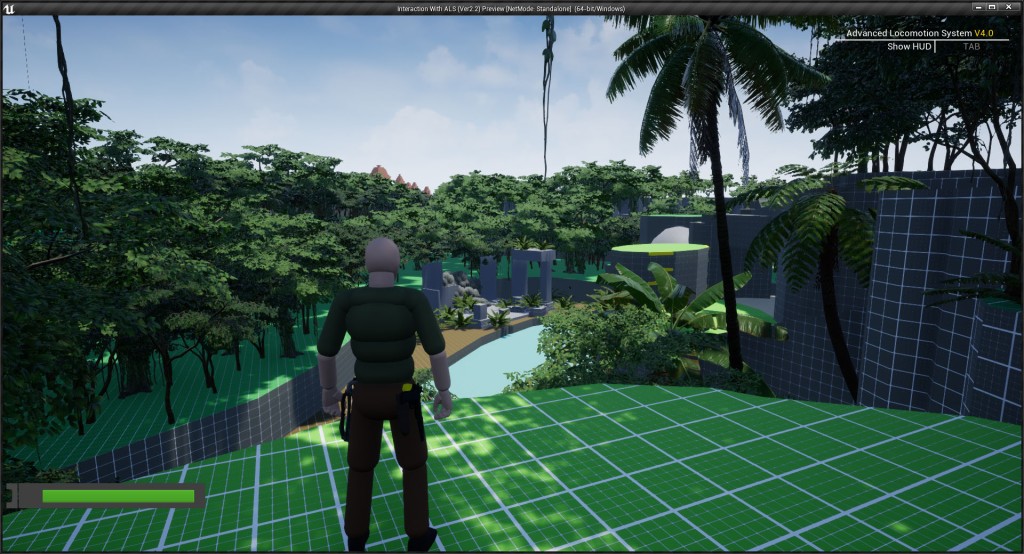
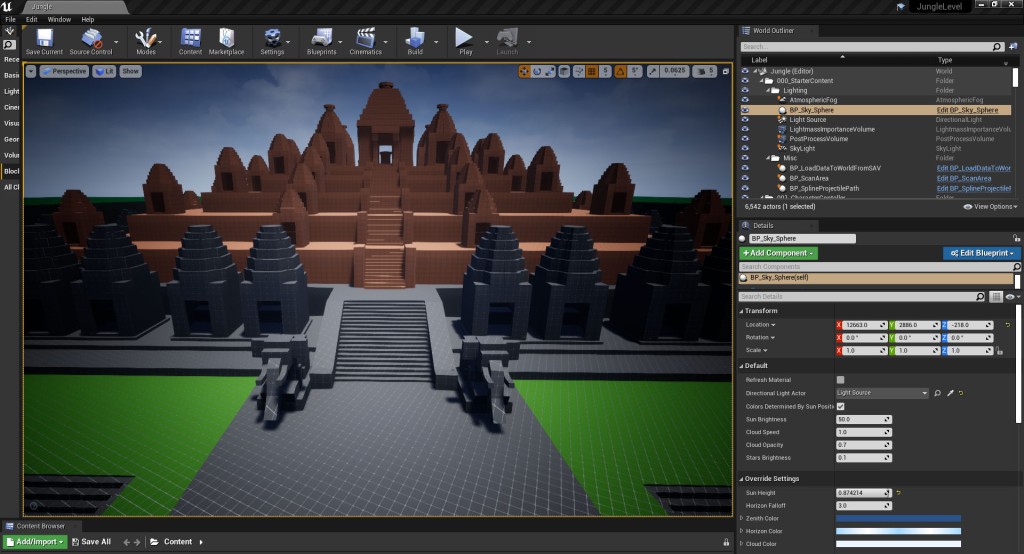
I started by blocking out the start section first as I wanted to get the first vista point, where the player sees the goal of the temple for the first time nailed earlier on as the temple is the guiding, global landmark of the level and needs to be introduced to the player early on in the level (fig 1). I’ve chosen not to start the player at the vista, with the landmark directly in front of them as I feel that the vista will be more impactful if the player stumbles upon it rather than it being the very first thing they see.
This start section makes use of level design techniques like funnel before reveal and three of the core elements of cognitive mapping: paths, edges and landmarks to guide players through this relatively short starting section and encourages players to progress through the level to reach their main goal of the temple in the distance. This area will also feature framing once the foliage has been added to the level which will be used to frame the temple in the distance, helping to draw the player’s attention to the landmark. Though foliage won’t be added to the project until the majority of the blockout process has been completed I am making sure to keep the foliage placement and the resulting shadows created, in mind when blocking out as I will be using the foliage to not only frame important landmarks but also to create complex shadows that help to guide the player subtly.
While blocking out the section has gone well I’m not overall happy with the start placement of the character as it feels a little bit like the player has just been dropped in the world. Alongside blocking out the rest of the level I’m going to look at redesigning or adding on an additional area to the beginning of the level that feels like a more natural and believable starting place.
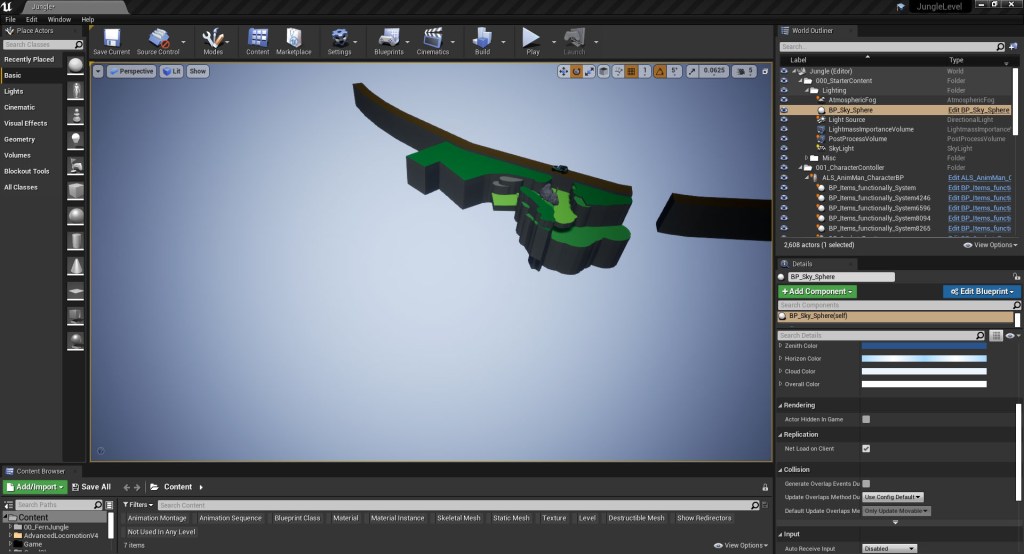
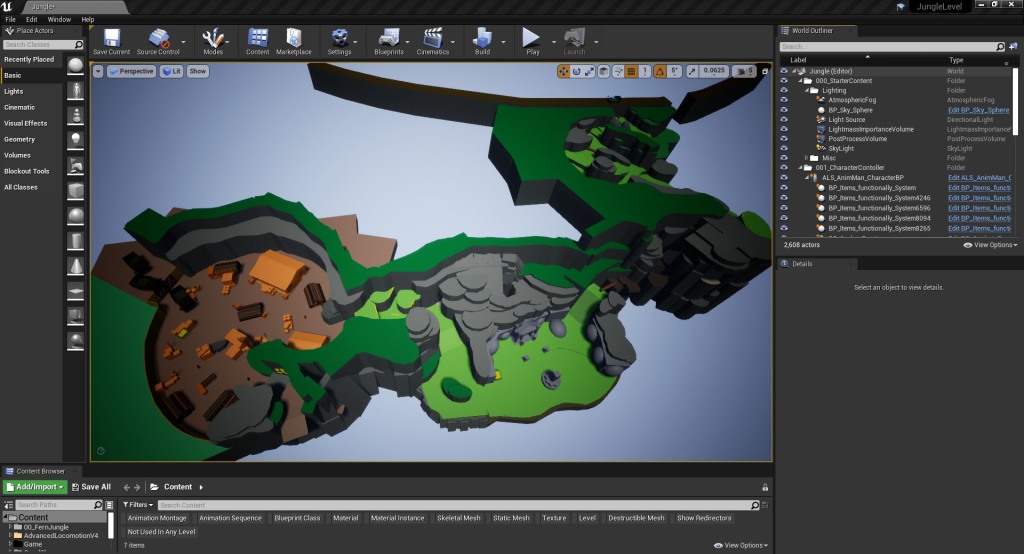
The next section is the spiralling path and cave area (fig 2). This area features the first node section in the form of a small side path that will contain a collectable for the player to find and also serves to introduce the climbing mechanics to the player early on. The collectables found within this level will be an optional extra that rewards the player for spending more time in a set location by exploring. The longer a player spends in an area the more accurate their cognitive maps become so I’ll be utilising the collectable placement to encourage players to spend more time in areas they may normally move fairly quickly through.
As the player progress through the cave, they have the option of two paths, a direct path that involves climbing down a wall that leads straight onto the exit and a slightly slower path that takes the player to the left side of the cave. This left section of the cave gives the player a sneak peek of the areas that will come next through an opening in the cave’s wall, rewarding players for exploring and taking the less direct path. This gap, which acts like a window to the rest of the level, allows the player to get a glimpse of where they will go next, allowing them to start to form connections in their mind between the different areas of the level and begin to form their cognitive maps.
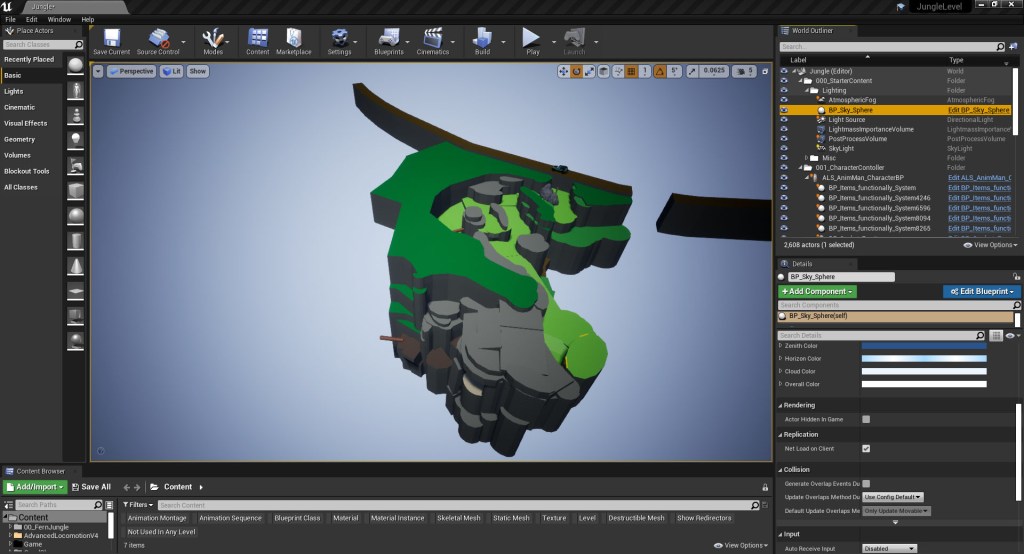
The final section I blocked out this week is the first small temple section (fig 3). This is the first district area that the player comes across, consisting of the small temple that the player is able to enter, a stone statue of the god Shiva outside and a series of giant stone faces carved into the walls of the temple and surrounding cliffs. All the objects in this area have the same architectural style, inspired by ancient Cambodian temples, which will help to cement this district in the player’s cognitive map as it is easier to remember areas which contain clusters of similar objects or functions.
This area will also feature the level design technique of Denial and Reward in the form of a collectable. Within the temple, the back wall has become partially damaged and the player is able to see through to a hidden chamber behind the main temple structure where a collectable will be visible. The player is unable to reach this collectable however and is only able to find the hidden path down to it once they have left the temple district area. As the player knows there is a collectable there when they come to the next node area which features a path that leads behind the temple they are able to work out that this path leads to the collectables. By using Denial and Reward in conjunction with paths and nodes the player is encouraged to really think about the space, and how the different areas connect which helps in the formation of their cognitive maps.
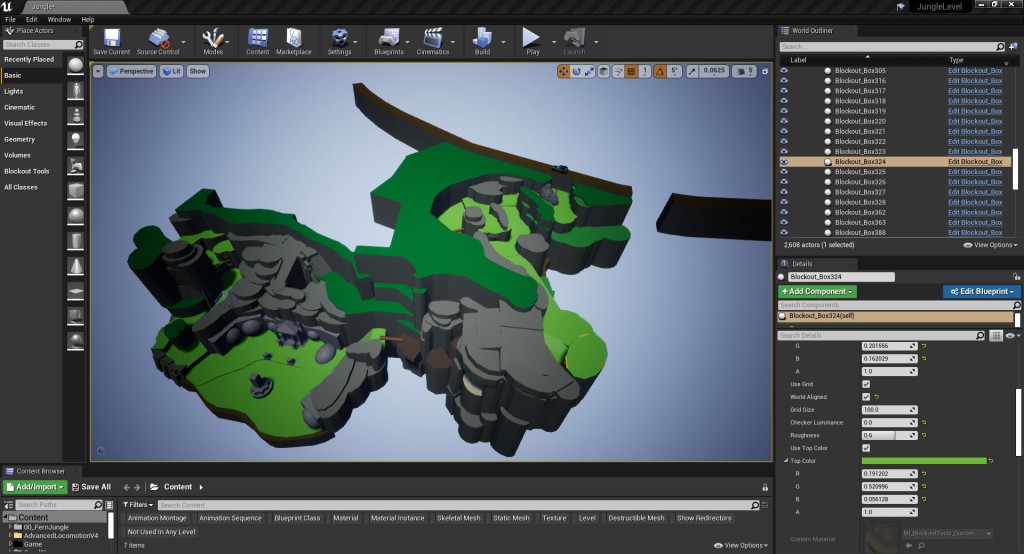
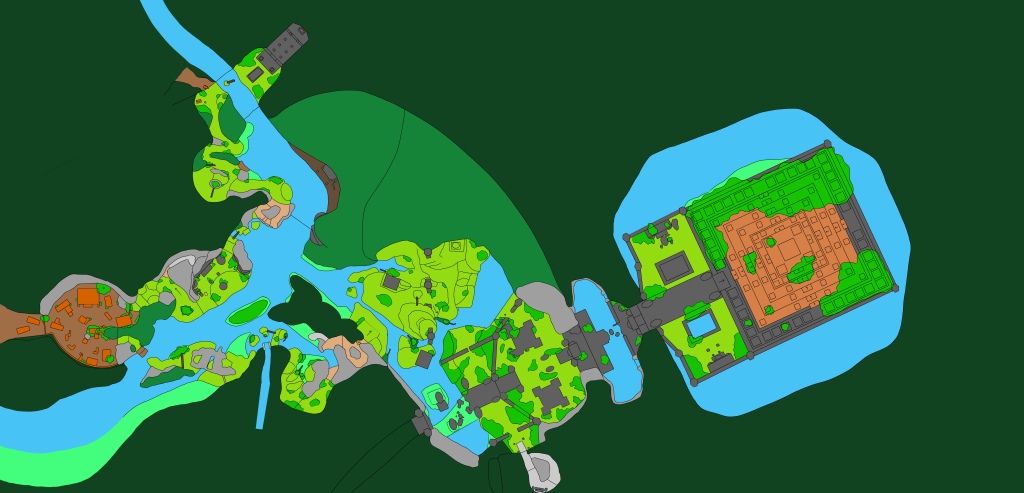
Below is a time laps (fig 4) for part of this weeks blockout process which shows how I use the 2D map as a guide for building the level on top off. I didn’t remember to record much of the process this week but I will try to record more of my block process for future level updates.
“The wilderness must be explored.”
Russell – Up (2009)
Figures:
Figure 1: Screengrab from Jungle level blockout showing the starting section
Figure 2: Screengrab from Jungle level blockout showing the spiral path and cave section
Figure 3: Screengrab from Jungle level blockout showing the small temple section
Figure 4: Video time laps for part of the blockout process from this week
Films:
Up. 2009. [Animated Film] Disney.
 Fern Griffiths
Leave a comment