
Over the next few weeks, and for the final module, I’m going to be focusing on creating a project for my portfolio that allows me to further develop my level designing skills. I wanted this piece to be the centre of my portfolio and to demonstrate how my personal practice as a level designer has improved since starting the course. When presented with the brief for this module I knew that I wanted to focus on creating a portfolio piece to further develop my skills and practice as a level designer. I have always found it really interesting how a game’s level is able to communicate things like direction and intent, game mechanic’s hints and narrative to the player and have decided that this is the area of research that I will be exploring for my final project.
Having been given the brief for this project, and knowing that I would be focusing on level design and how it can be used to communicate with the player, I started by looking at what GDC talks would be relevant and informative. One of the talks I can across was a talk by Brendon Chung from 2015 titled “Level Design in a Day: Wayfinding & Storytelling Techniques”. This talk was really interesting and raised the idea that a well-designed level is one that allows the player to travel through it “intuitively” (Chung 2015). This idea, that players should be able to travel through a game world intuitively by using the space to guide them is something that I consider to be a vital aspect of level design that can easily be overlooked. In order to allow a player to intuitively navigate spaces, easily understand where they need to go and work out how to get there, Chung recommends removing all aspects of navigation UI from the level design stage to ensure that as a designer you are using all aspects of the level to communicate and guide the player.
When looking at guiding the player, good level design should be able to do so without the need for UI. However a lot of games are reliant on UI to guide the player, The Witcher 3: Wild Hunt (2015) and many Ubisoft games like the The Division 2 (2019) are key examples of this (Pears 2018). UI is a really useful and vital part of of games as a whole, but relying on it can be detrimental to level designs and player enjoyment. A study by Iacovides et al. (2015) found that the removal of non-diegetic UI resulted in a more enjoyable and immersive experience for players. Though this study was specifically related to FPS I feel that the same results could also be achieved with third-person action-adventure games.
The job of a level designer is to make sure that the player knows where to go without having to rely on UI, that the player is able to look at the level and instantly and intuitively know where they need to go without any confusion or uncertainty. This idea of a player being able to intuitively navigate through a level really captured what I wanted to explore and will form the main area of research for my major project.
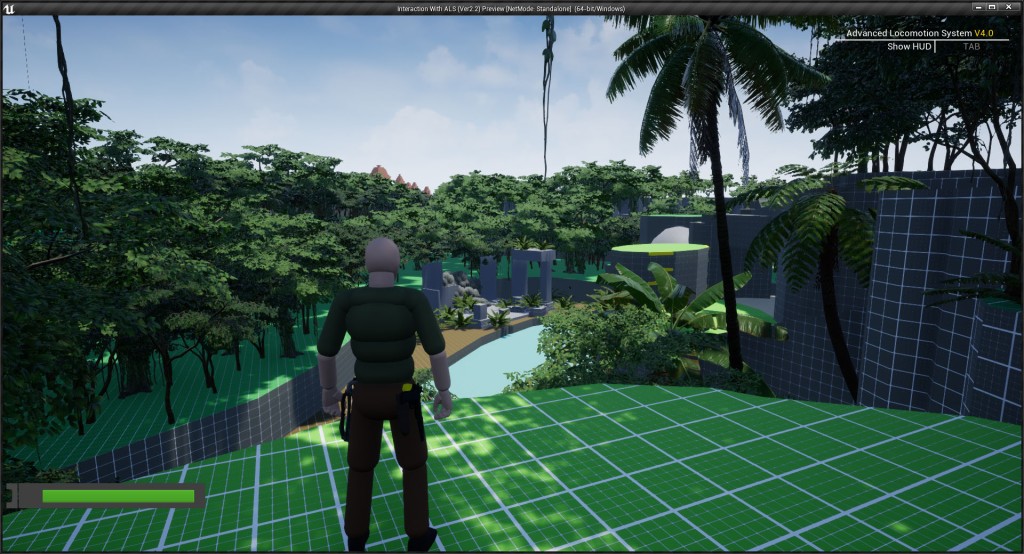
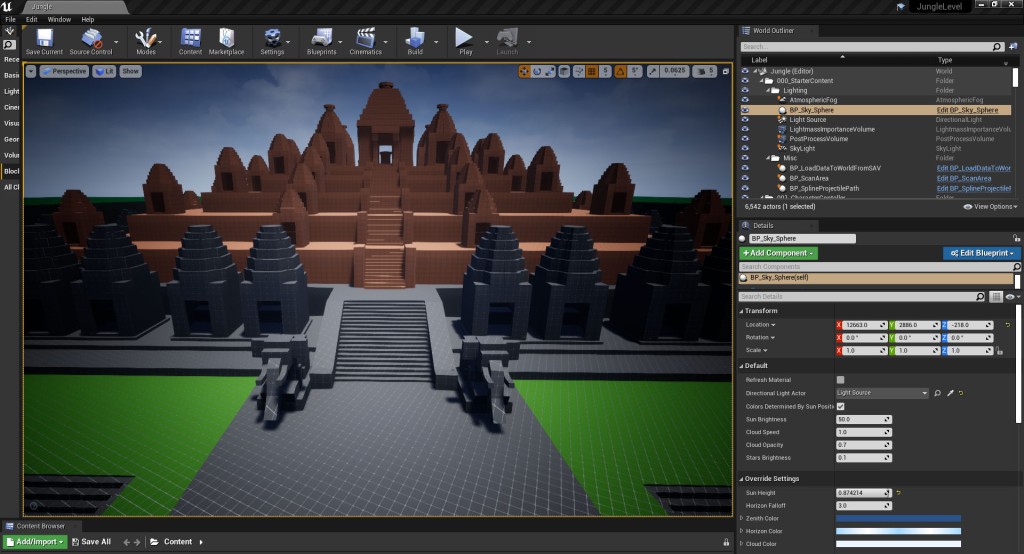
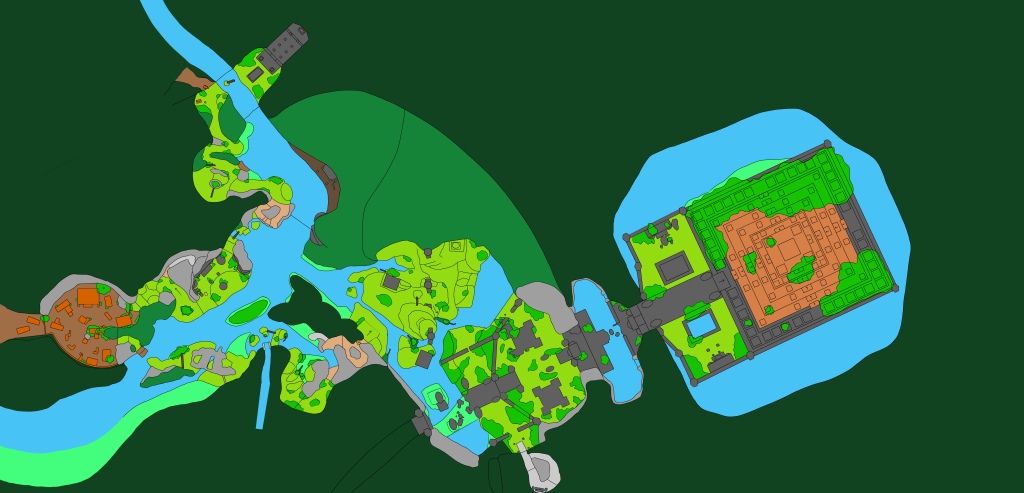
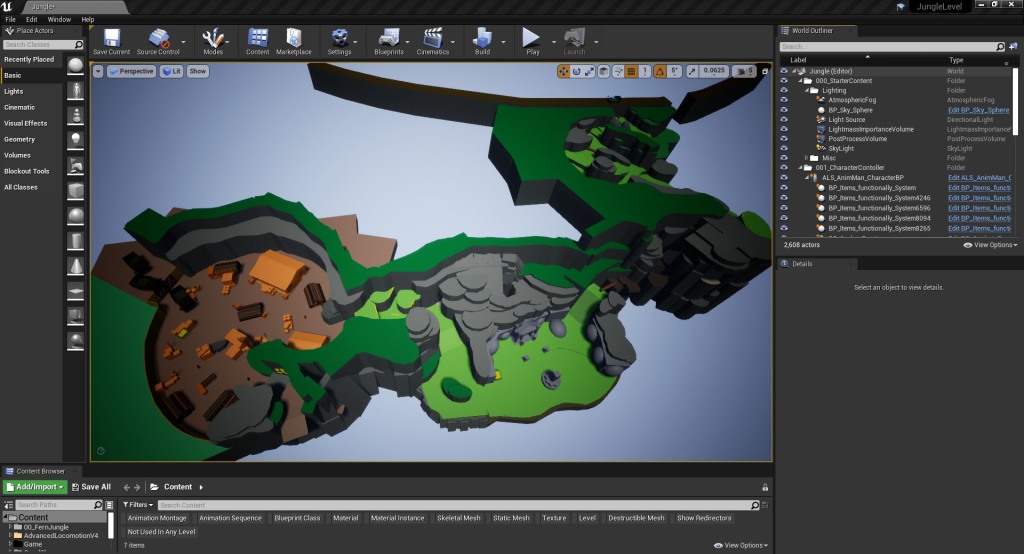
Having decided on a starting point for my research the final form that my major project will take will be a linear level. Focusing on a single linear level will allow me to playtest and iterate on my design. As I will be starting a job with Ubisoft as a Junior Level Designer in October, and will most likely be making open-world games, I wanted to create a portfolio piece that focused on the style of games that first made me first interested in Game Design, linear action-adventure. Using the Advanced Locomotion System v4, adapted by Jakub W Patreon, and the Unreal Engine I will create a third person adventure, inspired by games like The Last of Us: Remastered and Part 2 (2014, 2020), Uncharted series ( 2007 – 2017), and Tomb Raider games (2013 – 2018).
How will I guide the player and tell a story through level design:
- Player Navigation: Travel through level/world should feel intuitive, the player should easily be able to understand where they need to go and be able to work out how to get there.
- Level Readability: The level needs to be instantly readable to the player, they need to clearly understand what they can and can’t do and where they can and can’t go.
- Storytelling: The design of the level needs to convey clues about the world history, the setting and the characters that inhabit them. These clues can be overlooked by players not interested in the story but come together to imply a wider narrative for players interested in the story.
As a Games Designer specialising in Level Design, my main goal with this project is to create a level that intuitively guides the players and conveys the game’s narrative through level design. This project is the perfect opportunity to further develop my level design skills and create a portfolio piece that I am proud of before I enter the industry as a Junior Level Designer in October.
“Often when we guess at others’ motives, we reveal only our own.”
Mara Sov – Destiny
References:
CHUNG, Brendon. 2015. “Level Design in a Day: Wayfinding & Storytelling Techniques” GDC Vault [Video Online]. Available at: https://www.gdcvault.com/play/1022117/Level-Design-in-a-Day [Accessed 30th May 2022]
IACOVIDES, I., A., L. COX, R. KENNEDY, & C. JENNETT. 2015. Removing the HUD: The impact of non-diegetic game elements and expertise on player involvement. CHI PLAY ’15 Proceedings of the 2015 Annual Symposium on Computer-Human Interaction in Play. New York, NY, USA: ACM
Available from: https://vimeo.com/307742358 [Accessed 30th May 2022]
Games:
The Division 2. 2019. Massive Entertainment. Ubisoft.
The Last of Us: REMASTERED. 2014. Naughty Dog, Sony Interactive Entertainment.
The Last of Us: Part Two. 2020. Naughty Dog, Sony Interactive Entertainment.
Tomb Raider. 2013. Crystal Dynamics, Square Enix.
Tomb Raider: Rise of the Tomb Raider. 2015. Crystal Dynamics, Square Enix.
Tomb Raider: Shadow of the Tomb Raider. 2018. Crystal Dynamics, Square Enix.
Uncharted: Drake’s Fortune. 2007. Naughty Dog, Sony Interactive Entertainment.
Uncharted 2: Among Thieves. 2009. Naughty Dog, Sony Interactive Entertainment.
Uncharted 3: Drake’s Deception. 2011. Naughty Dog, Sony Interactive Entertainment.
Uncharted 4: A Thief’s End. 2016. Naughty Dog, Sony Interactive Entertainment.
Uncharted: The Lost Legacy. 2017. Naughty Dog, Sony Interactive Entertainment.
The Witcher 3: Wild Hunt. 2015. CD Project Red, Sony Interactive Entertainment.
 Fern Griffiths
Leave a comment