Cognitive mapping, also referred to as mental mapping and mental imaging, is a term first coined by Edward Tolman in 1948 which describes the knowledge that humans hold of their surrounding environment. Cognitive/Mental maps are formed as a result of us being “continuously engaged in the attempt to organise our surroundings, to structure and identify them” (Lynch, 1975). According to Kitchin, mental imaging is an intuitive ability as it is “responsible for geographical ‘survival’ knowledge — giving us a selective advantage in a difficult and dangerous world” (1994). They are a mental device used to structure the complexity of the environment into a meaningful pattern which then informs and guides behaviour. Walmsley et al. see cognitive/mental mapping as a mental tool whose role is to simplify, code and order the endlessly complex world and environment that we find ourselves in (1990).
Cognitive maps are both more detailed and simpler than paper maps; they are “complex, highly selective, abstract and generalised” (Downs & Stea, 1973). They are a result of abstraction, with the highly complex environment that a person is seeing being reduced down to a concise representation that is then able to help people navigate space. Cognitive/Mental maps are at their core a wayfinding tool that helps an individual to understand and organise spaces in a hierarchical way, ordering what a person sees by means of “environmental cues” (Golledge, Richardson & Gale 1987, p. 216). These “cues” are vital physical elements which we form the bases of these cognitive/mental maps in our minds as we learn how to navigate between them. Over time, we discover more and learn more about a set of environmental cues, forming connecting pathways as our spatial knowledge becomes more like a real map (fig. 1. Lynch, 1975).

Cognitive mapping isn’t just used for navigating real-world space but is also a vital way that players understand and move through game spaces, as it allows the players to develop a feeling of mastery of the space and prevent the player from feeling confused and annoyed (Pears 2018). In a talk on mental mapping Level Designer Max Pears described mental mapping as being “the way that a player understands a space”. He expand on this further saying its about how a player understands the way that space are connect and interact together so that players know how to easily move through a level (2018).
To make cognitive/mental mapping easier designer can do a number of this to prevent the overall form and progression of the level from overwhelming the player. Lynch’s Image of the City (1975) describes how we perceive and recall features in urban spaces citing the most distinctive elements being paths, nodes, edges, districts and landmarks. While Lynch’s work was written in relation to urban, man-made spaces, the same principles can be applied to level design, as even levels set in wild and rural spaces are created from scratch. As the focus of my project is linear style games I will be focusing on how the following can be applied to this type of level design:
- Path
- Nodes
- Edges
- Districts
- Landmarks
Paths
Lynch, defines paths as “the channels along which the observer customarily, occasionally, or potentially moves.” (1975). Paths guide players through the world, they connect large areas of space to form cognitive maps. They facilitate movement throughout the landscape and can be streets, walkways, undergrounds, canals or railway lines. In level design, paths are linear spaces that direct movement and travel, leading the player to the objective (Oueijan 2021). When used correctly they allow players to know exactly where they need to go in order to reach the main objective and when to leave the main path to find additional resources, collectables or rewards. Paths are a useful tool for guiding lost players back toward the main objective, helping them reorient themselves and move to the next space (Oueijan 2021). Paths are a vital tool that level designers can use to form mental maps as they form the connections between the different spaces in a level.
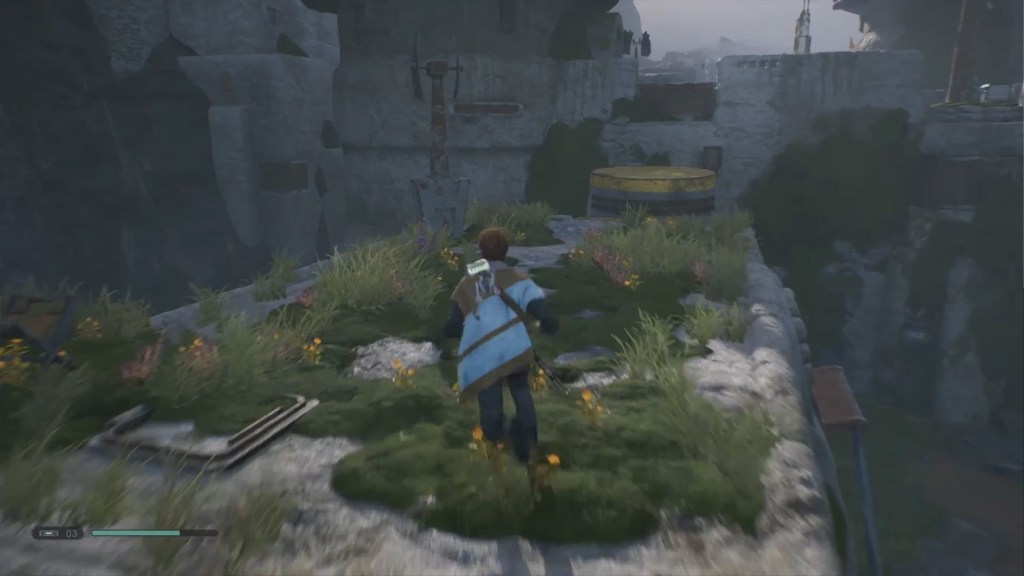
In games more linear style games like Bioshock (2007), The Rise of the Tomb Raider (2015), and Star Wars Jedi: Fallen Order (2019) paths are the main way that players are able to travel through the world, acting as corridors that the player can use to get from one area to another. While these games are linear in nature, the player does have some degree of freedom and is mostly able to choose where they go next whether this is to progress to the next area or revisit a previous section. However, once they have committed to a section the path through this area dictates the players’ movement with the player never being able to leave the predetermined path. For example Star Wars Jedi: Fallen Order (2019) the player is able to choose the order of the planets they visit, but once they get to an area they are unable to leave the predetermined paths that have been laid out for them by the level designer. For example, when the player lands on Zeffo, the space is fairly open and gives the feeling of being able to travel in any direction. When the players explore the space however they find that they are only able to progress down certain paths, with some paths only being accessible depending on whether the player has unlocked an ability or a shortcut. Once the player chooses a route the path becomes more directed, pushing the player forward in a set direction to reach the end objective (fig 2.).
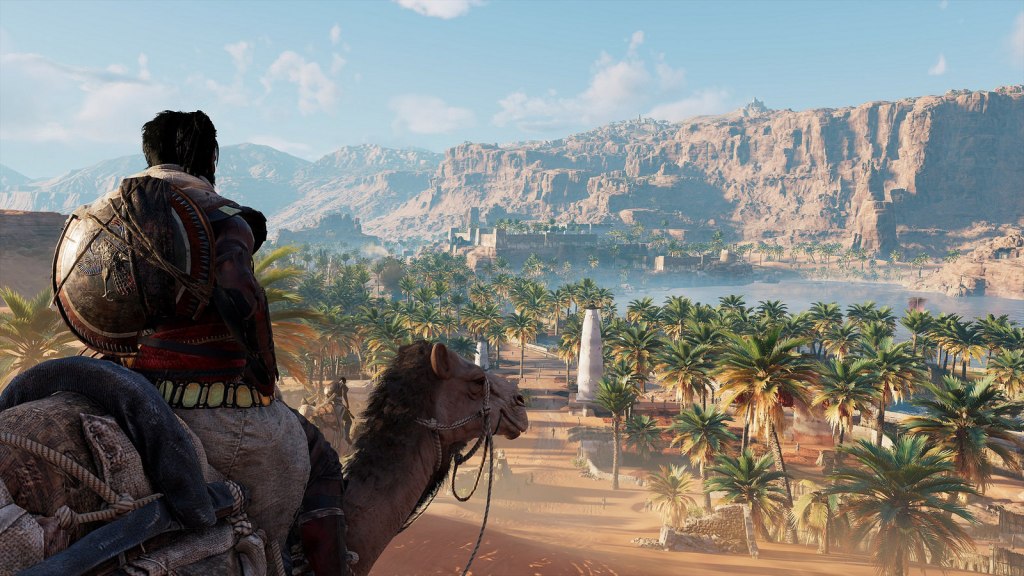
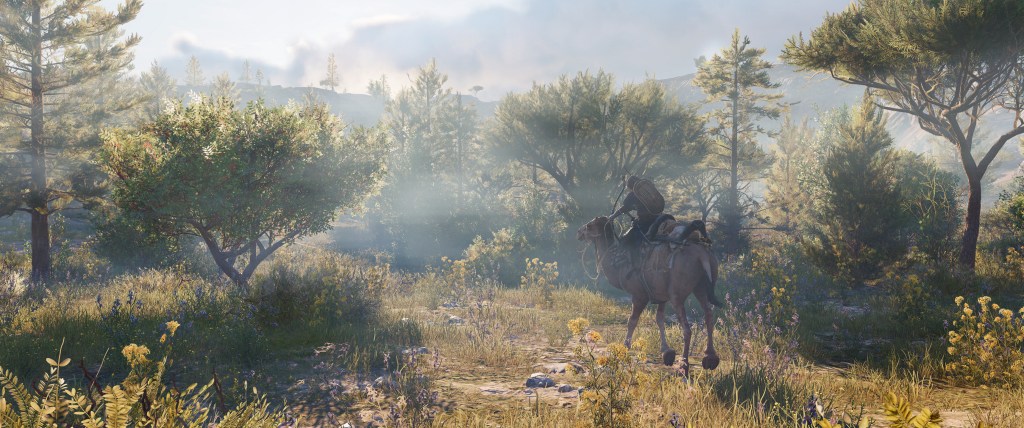
In open-world games, like the Assassins Creed series, paths are used as a way to easily guide players to their next location and to help lost players find their way back to areas of interest or the main objective. In Assassin’s Creed Origins (2017) paths can be found throughout the game, connecting the different inhabited areas together and guiding the player from one objective to the next (fig 3.). While the player is free to leave these paths at any point they choose the terrain is often harder to navigate and often features more obstacles, such as foliage, which block the player’s movement (fig 4.).
Nodes
Lynch describes nodes as primarily being “junctions, places of a break in transportation, a crossing or convergence of paths” (1975).
Nodes are the area where multiple paths converge, they’re point references that are defined by paths and most of the time they are things like traffic intersections, transport hubs or hub spaces that players can access various areas of the map from (Oueijan 2021). Nodes are spaces that have many ins and outs that the player can choose from. To make nodes easier to navigate they need to have some sort of defining feature or local landmark to help orient the player. Making the node an area that the player spends time in helps to cement them in the player’s cognitive maps as an area where they can make decisions on where to go. As a space that can lead to multiple other areas, they are often an area that the player keeps revisiting.
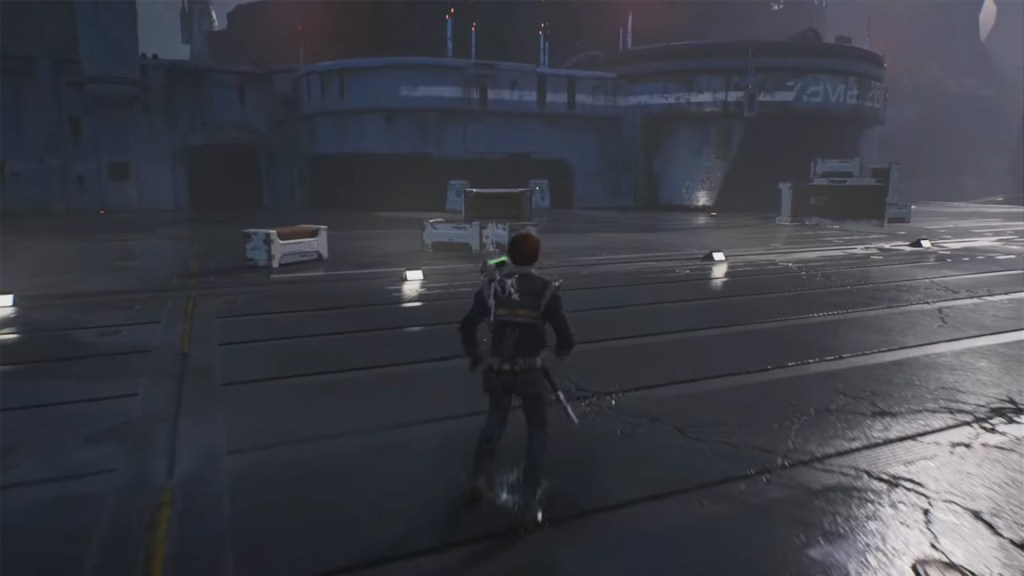
In linear-style games, nodes are areas where paths finally come together after separating. They are areas that allow the player to leave the linear route they have been travelling down and choose a different path to follow. In Star Wars Jedi: Fallen Order (2019) the landing pads which form the starting area for the planets the player can visit are nodes. When following a path back to the ship this is the area where the paths all converge. Zeffo is a good example of a node as there are multiple paths in and out of the areas, with the player being able to unlock shortcuts back to the node as they progress through the level (fig 5.). As the landing pad is always the start point of this world players end up spending a lot of time in this area and learning which path they need to take to get to the desired end location.
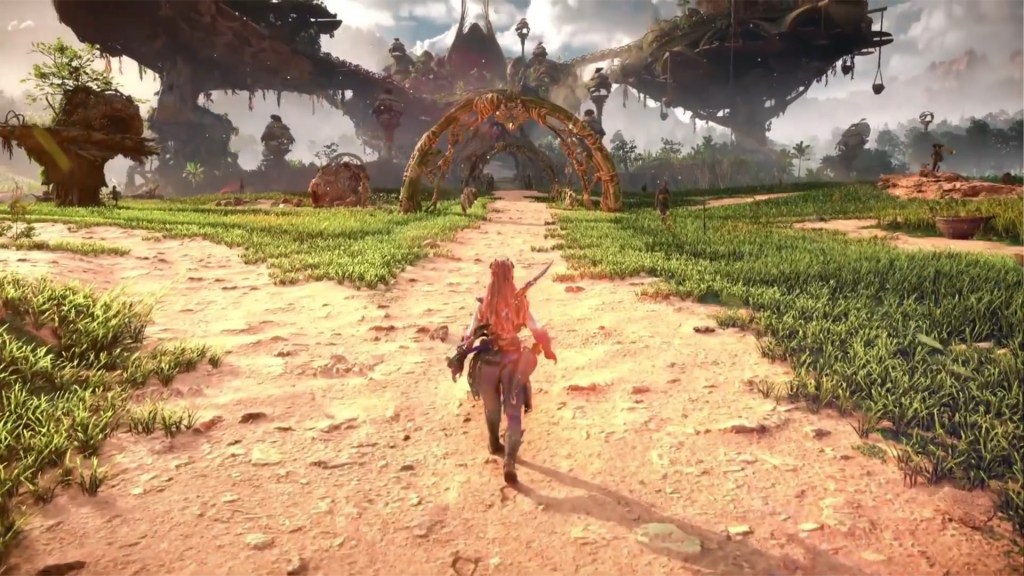
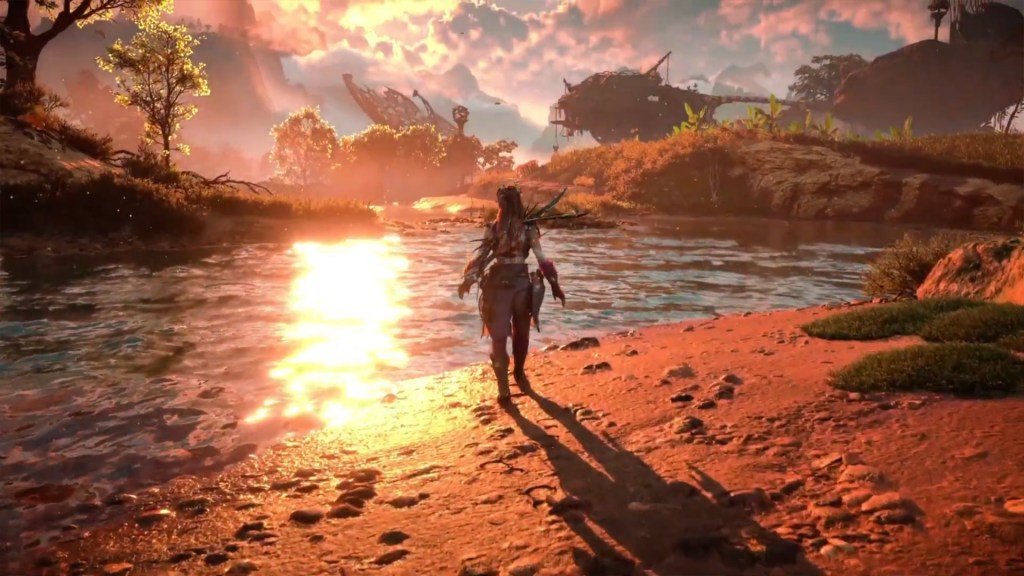
In open-world games nodes are areas that aid navigates the large open world; they can come in the form of settlements like towns or cities or areas like crossroads that process a notable feature like a landmark or signposts which inform the player on where the paths lead in and out of the node go to. In Horizon Forbidden West (2022) nodes can be found in the settlements and campfires dotted throughout the world. The campfires are smaller nodes, that connect local paths together and create a familiar space that is consistent wherever the player finds them. The settlements are larger spaces, that are the junctions for the major paths in the areas and form a space that the players will continue to revisit over and over again. Plainsong is an example of a node in the form of a settlement and is an area that the player will revisit multiple times throughout the game. The three large satellite dishes that the buildings are mostly constructed upon form a landmark that the player is able to use to orientate themselves with as they are clearly recognisable and readable regardless of the angle that the player approaches them from (fig 6. – 7.).
Edges
Lynch defines edges as being “linear elements not considered as paths: they are usually, boundaries between two kinds of areas. They act as lateral references. Those edges seem strongest which are not only visually prominent, but also continuous in form and impenetrable to cross” (1975).
Edges are used to control continuity or separate things, they can be found in games in the form of gates, walls and cliffs. They tend to be vertical in nature due to the fact that the majority of games have players move in a horizontal fashion (Oueijan 2021). Some edges act as hard boundaries, preventing the player from moving past them while others allow the player to move past them but only at specific points like the doorways on the outside of buildings. Whether or not you can cross an edge should be clear to the player, if the edges are blurred then they won’t be as good at anchoring the player’s cognitive map which can lead to confusion and frustration if the player is unsure as to where the playable space ends.
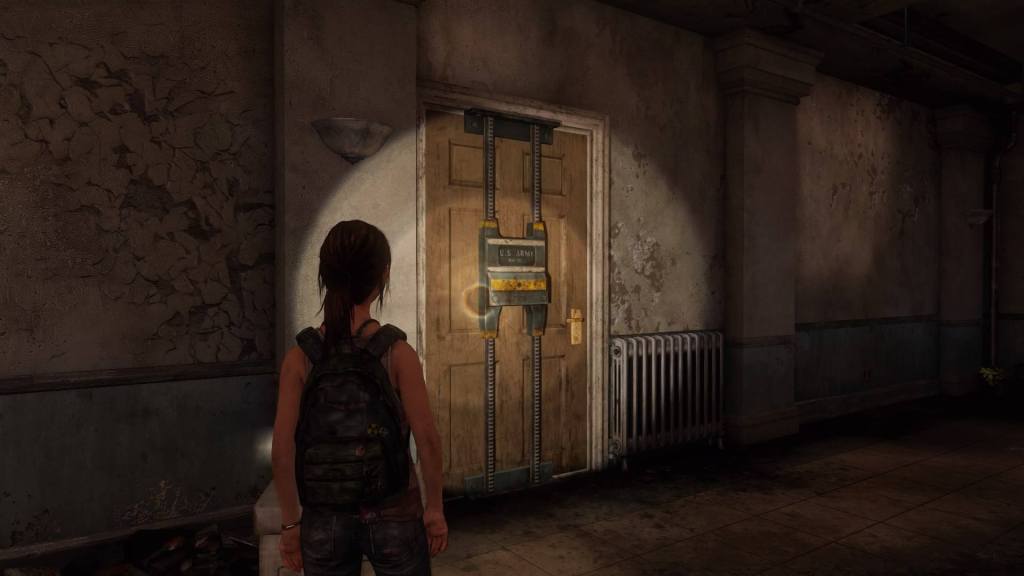
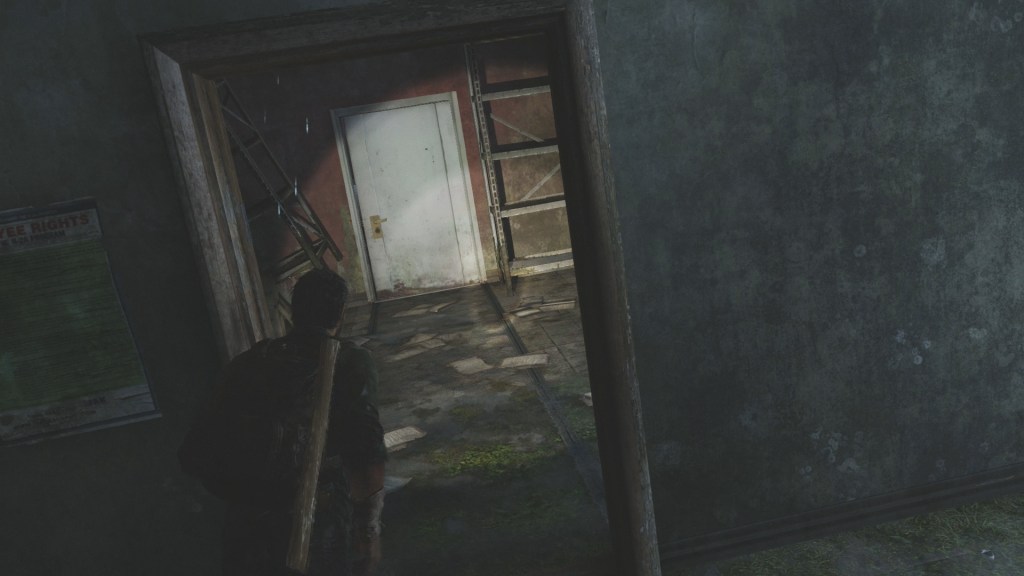
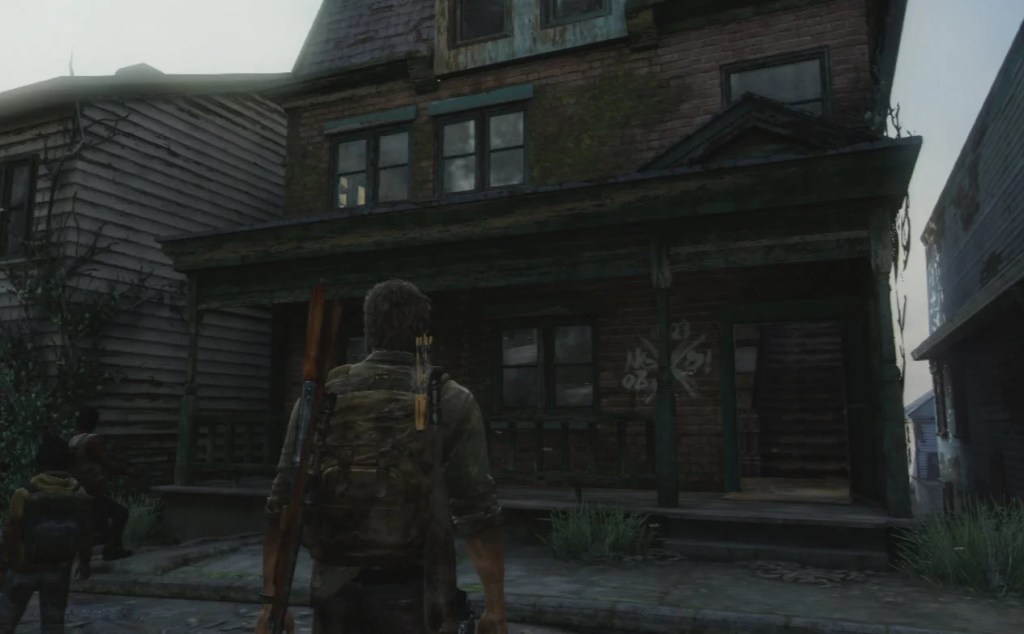
In The Last of Us (2014), edges can be found in the form of cliffs and sudden drops, walls and doorways are used to communicate to the player where they can and can’t go. Whether or not the player is able to move past these edges or whether they are an unpassable hard boundary is clearly communicated to the player visually. Doorways that players cannot pass through are clearly barricaded, with metal or wooden structures obstructing the door from being able to be opened (fig 8.), while doorways that can be opened using a shive are closed with no barricade over the door (fig 9.); while doorways that can be entered either have an open door or no door at all allowing the player to pass through the hard edge created by the wall (fig 10.).
Districts
Lynch defines districts as relatively large areas “which the observer can mentally go inside of, and which have some common characteristics. The characteristics that determine districts are thematic continuities which may consist of an endless variety of components” (1975).
Districts are formed of clusters of similar objects or areas of similar purpose like housing, industrial zones and market areas. They tend to be mid to large-scale spaces that players can enter. Having clear districts really helps to differentiate the areas from each other, helping the players to form their cognitive maps. An important concept of districts is clustering which refers to how objects are grouped together with similar objects. This type of clustering can be semantic, mechanical or visual and it is generally good practice to cluster objects of a similar purpose together as it leads to more believable spaces (Oueijan 2021). Clustering is a useful tool to use for cognitive maps as grouping objects or buildings of similar function together means that the player is more likely to remember the clusters which reinforce the cognitive map.
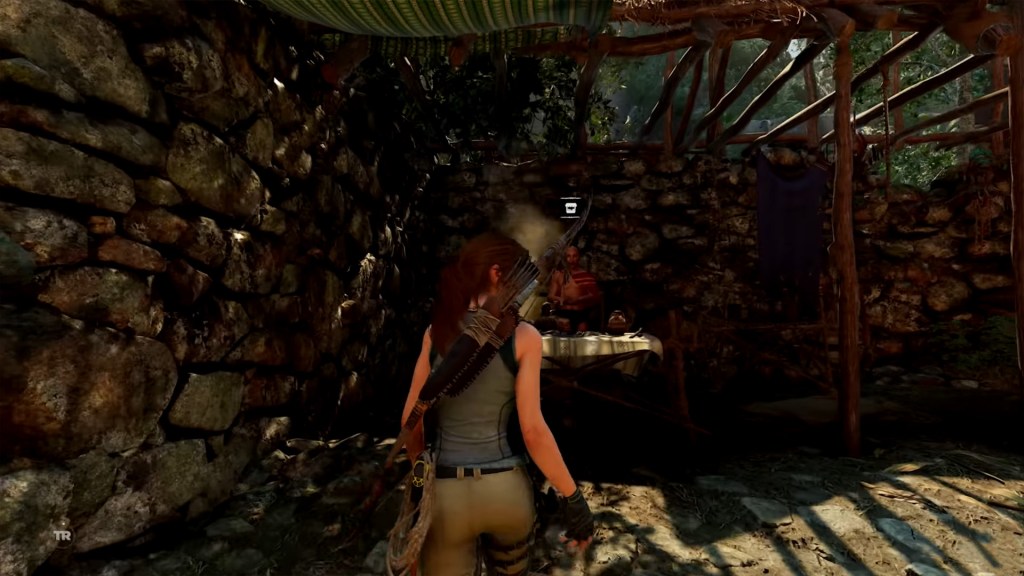
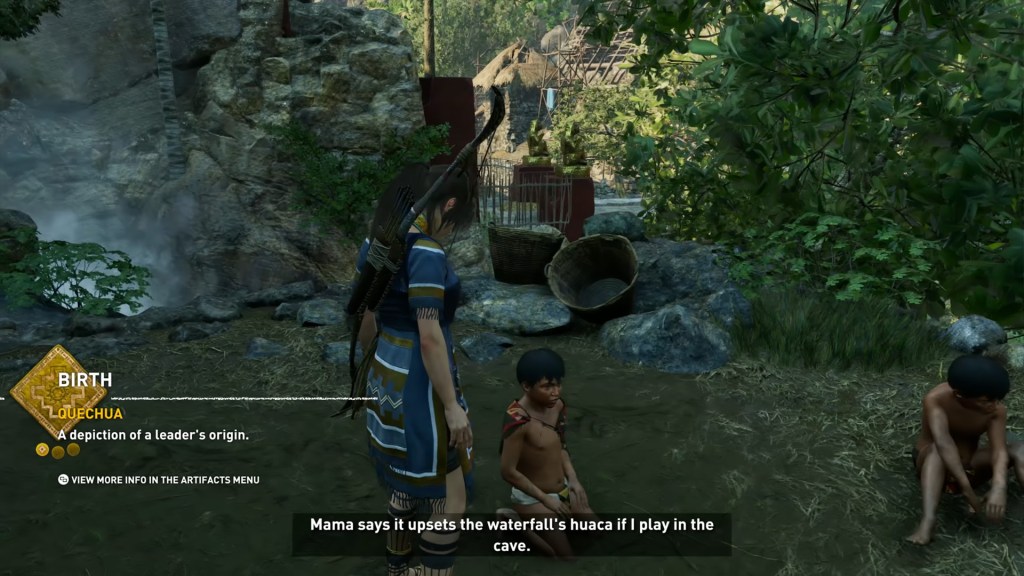
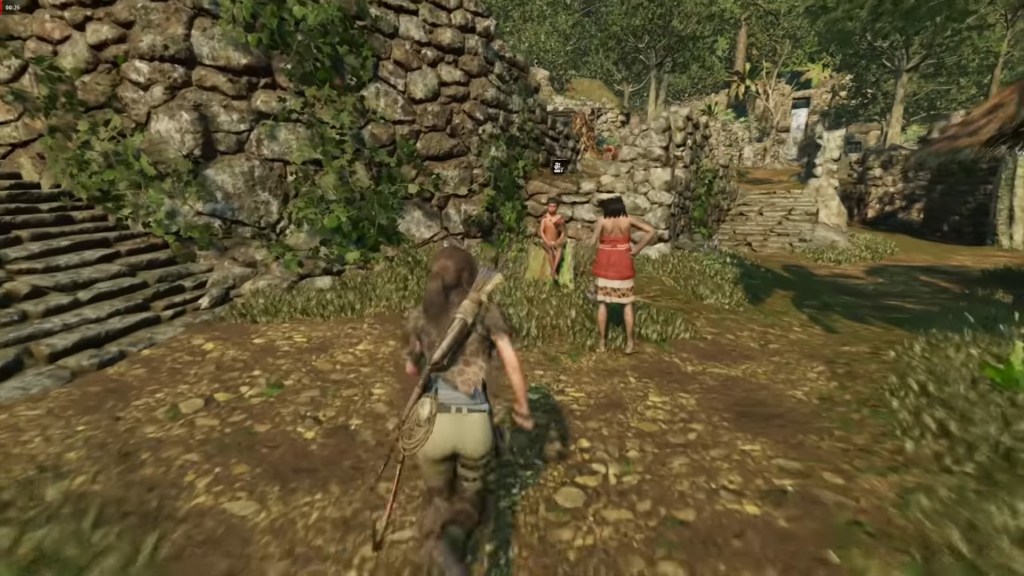
In Shadow of the Tomb Raider (2018) the first settlements that the player comes across are separated into different zones. Paititi has 5 clearly distinct zones that help the player to navigate and understand the spaces, the Fishing District, the Marketplace, the Town Square, the Religious District, and the Residential Areas. These distinct areas help the player to understand Paititi as a whole and enable the player to easily navigate the space. The different districts have different purposes with the player being able to buy gear in the Marketplace (fig 11.), interact with NPC in the residential area (fig 12.) and pick upside quests from characters in the Fishing District (fig 13.)
Landmarks
Lynch defines landmarks as a form of reference point, but one that “the observer does not enter within them, they are external. They are usually a rather simply define physical object: building, sign, store, or mountain” (1975). They are sometimes called “weenies” are visual guides that act as anchor points within the environment. The term “weenie” comes from Disney’s Theme park design where it’s used to describe “visual magnets” that draw guests from one area to another (Sklar, 2013). In Disney parks, these are seen everywhere and on every scale. From the moment they enter Disney World, Florida, guests are led throughout the park by the use of weenies. They’re first drawn to the centre hub by Cinderella’s Castle; then to each of the “lands” by gateways that indicate the theme of the space that follows. Within each of these spaces, visitors are able to navigate through the use of another weenie, like Space Mountain’s cone and spires in Tomorrowland or the distant peaks of Big Thunder Mountain Railroad in Frontierland.
The use of landmarks in video games mics that of Disney’s Theme parks. They are single, localise and memorable features are recognisable either visually such as a statue or uniquely shaped building, narratively such as the location of an important or emotional story beat or experientially from where a dramatic action or gameplay event previously took place (Oueijan 2021). Landmarks in video games help not only orient players from a distance but also act as a “beckoning hand” that encourages the player forward through the level (Hench 2009). Landmarks are a good way of reminding the player what and where their goal is after playing sections that have distracted their attention and focus, such as combat or when they are unable to see the landmark for a prolonged period of time, such as going through a thick area of foliage or an interior space like a cave (Ellis 2016). Landmarks are also good for orienting players in areas where they haven’t been before, allowing them to understand how this new space relates to the ones they have been in before as the landmark acts as an anchor point. Landmarks should be referenced as many times as possible for them to be useful for the players to create their own cognitive maps (Oueijan 2021).
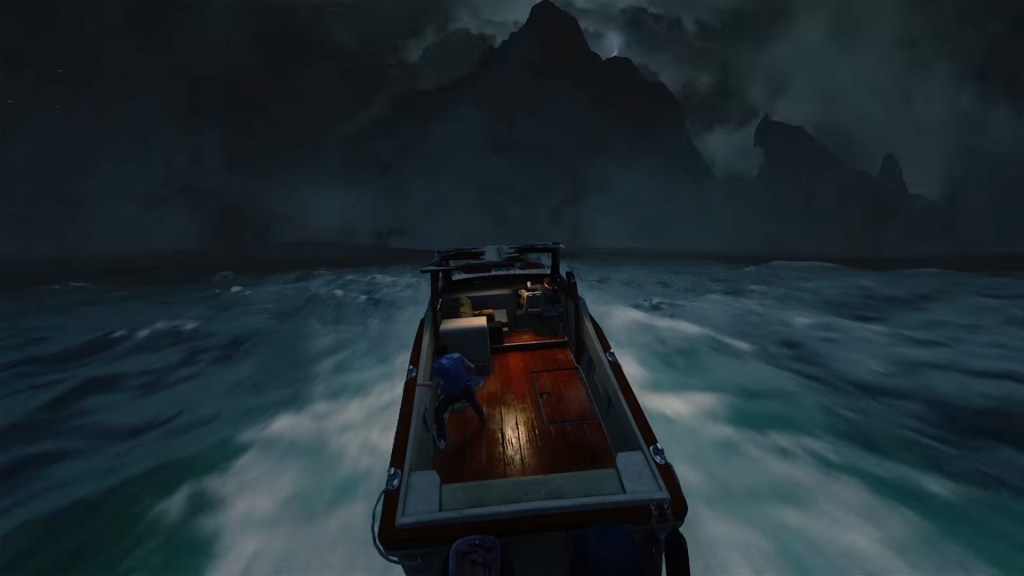
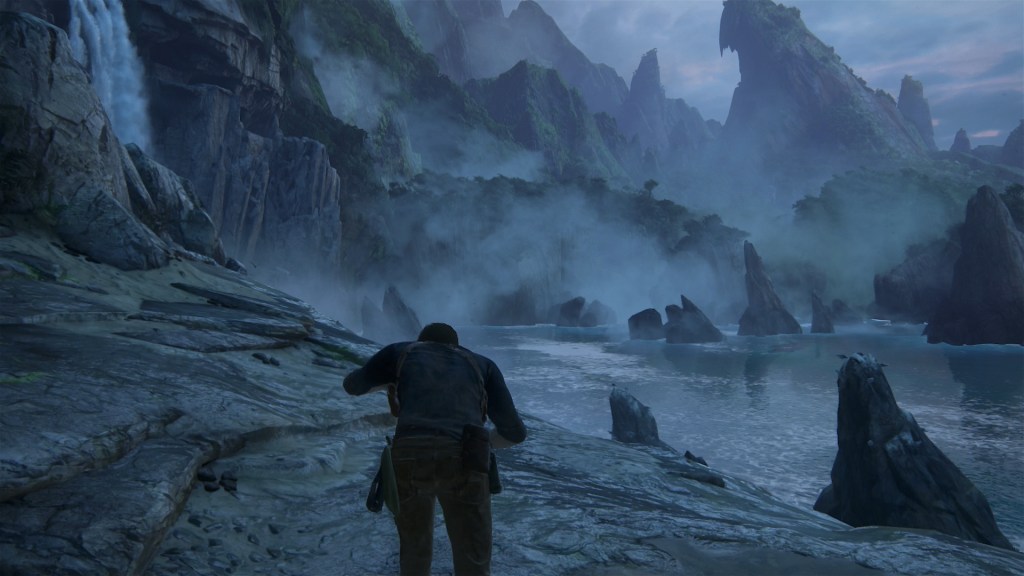
In Uncharted 4: A Thief’s End (2016) landmarks can be found throughout the levels and are regularly pointed out to the player by the companion NPCs. When the game first starts with the boat chase, the island is pointed out to the player as the end goal. While the mountain isn’t always clearly visible to the player because of the fog, its sheer size means that when it is visible it acts as a beckoning landmark that draws the player in. When the player ends up washing a shore on the island after the crash, the jagged, gaping mouth-shaped mountain that was visible on the right of the island during the boat chase sequence becomes the new landmark that the player is drawn towards in their search for Sam (fig 14. – 15.).
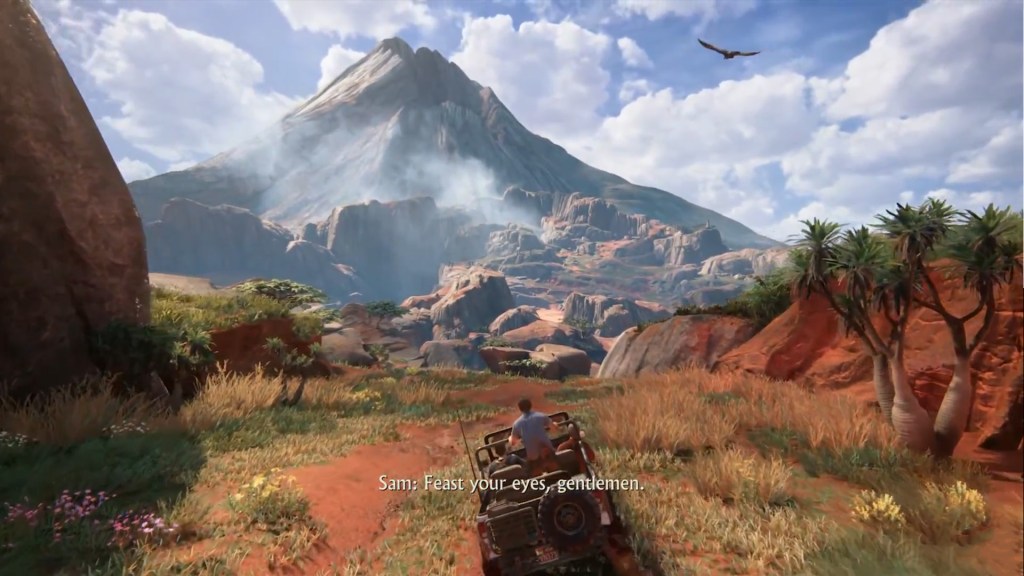
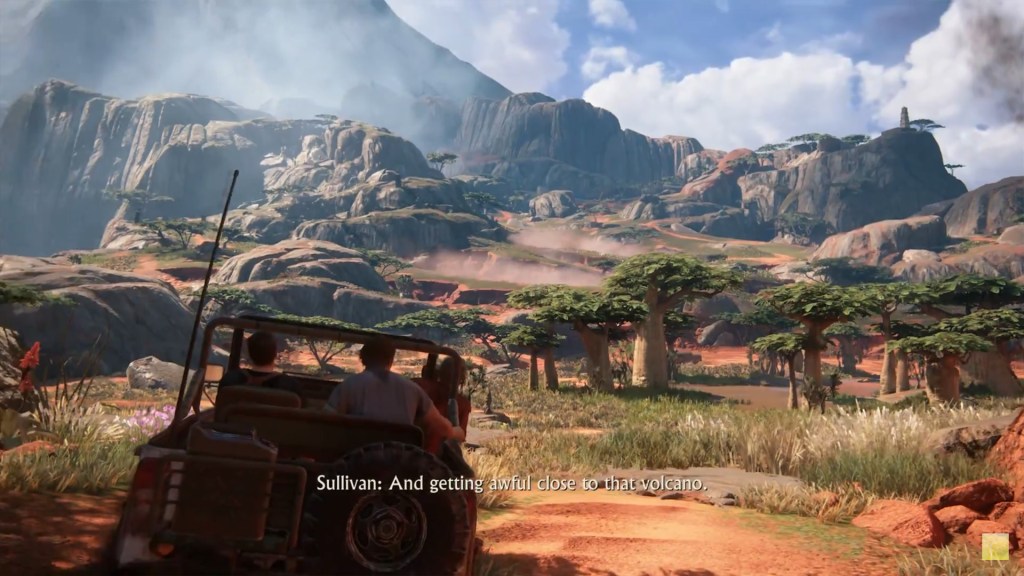
During the Madagascar level, the landmark of the volcano is once again pointed out to the player by the companion NPCs as the end goal. Even if it wasn’t pointed out as being the end goal its giant, looming size would automatically draw the player’s attention and become an object that the player is able to orient themselves with due to its scale in comparison to the rest of the environment and the fact that it can be seen from most areas of the level (fig 16.). As the player gets closer to the volcano it takes up more and more of the screen, making it harder to use as a landmark; when this happens a new landmark can be found in the form of a watch tower to the right of the screen, that has now become clearer as it is framed against the sky rather than the mountain. Again this is pointed out as the end location for the player to get to, but even if it wasn’t its off-white colour against the dark browns, oranges and greens of the environment makes the structure stand out allowing for the player to easily distinguish it and use it as an anchor point for navigating the environment (fig 17.).
“We form a mental map, and then that shape, shapes us”
Lois Farfel Stark (2018)
References:
DOWNS, R. M., & D. STEA (Eds.). 1973. Image and Environment: Cognitive Mapping and Spatial Behaviour. Chicago: Aldine Publishing Company.
ELLIS, Pete. 2016. “Clever Level Design: More than Meets the Eye” 80 Level [online]. Available at: https://80.lv/articles/how-to-build-good-levels-for-games/ [Accessed 6th June 2022]
GOLLEDGE, R. D., G. D. RICHARDSON, & N. GALE. 1987. “Cognitive Images of the City.” In C. S. YADAV (Ed.), Perceptual and Cognitive Image of the City. New Deli: Concept Publishing Company.
HENCH, John. 2009. Designing Disney: Imagineering and the Art of the Show. Ashland: Baker & Taylor.
KITCHIN, R. M. 1994. “Cognitive Maps: What They Are and Why Study Them?”. Journal of Environmental Psychology. 14(1):1-19
LYNCH, Kevin. 1975. The Image of the City. Cambridge, Mass: Massachusetts Institute of Technology.
OUEIJAN, Nicolas. 2021. “Stop Getting Lost: Make Cognitive Maps, not Levels” GDC Vault [Video Online]. Available at: www.gdcvault.com/play/1027206/Stop-Getting-Lost-Make-Cognitive [Accessed 6th June 2022]
PEARS, Max. 2018. “4C: Understanding your level – Mental Mapping” Vimeo [online]. Available from: https://vimeo.com/307742358 [Accessed 6th June 2022]
SKLAR, M. 2013. Dream it! Do it!: My half-century creating Disney’s Magic Kingdoms. New York: Disney Editions.
STARK, Loise, Farfel. 2018. The Telling Image: Shapes of Changing Times. Austin. TX: Greenleaf Book Group LLC
TOLMAN, Edward. C. 1948. “Cognitive maps in rats and men.” Psychological Review. 55(4): 189-208
WALMSLEY, D. J., T. F. SAARINEN, & C. L. MACCABE. 1990. “Down under or centre stage? The world images of Australian students.” Australian Geographer, 21(2), 164–173.
Games:
Assassin’s Creed Origins. 2017. Ubisoft, Ubisoft
Bioshock. 2007. 2K Games, 2K Games.
Horizon Forbidden West. 2022. Guerrilla Games, Sony Interactive Entertainment.
The Last of Us: REMASTERED. 2014. Naughty Dog, Sony Interactive Entertainment.
Star Wars Jedi: Fallen Order. 2019. Respawn Entertainment, EA
Tomb Raider: Rise of the Tomb Raider. 2015. Crystal Dynamics, Square Enix.
Tomb Raider: Shadow of the Tomb Raider. 2018. Crystal Dynamics, Square Enix.
Uncharted 4: A Thief’s End. 2016. Naughty Dog, Sony Interactive Entertainment.
Figures:
Figure 1: LYNCH, Kevin. 1975. “Figure 35” from The Image of the City. Cambridge,Mass: Massachusetts Institute of Technology.
Figure 2: Star Wars Jedi: Fallen Order. 2019. Respawn Entertainment, EA
Figure 3: Assassin’s Creed Origins. 2017. Ubisoft, Ubisoft
Figure 4: Assassin’s Creed Origins. 2017. Ubisoft, Ubisoft
Figure 5: Star Wars Jedi: Fallen Order. 2019. Respawn Entertainment, EA
Figure 6: Horizon Forbidden West. 2022. Guerrilla Games, Sony Interactive Entertainment.
Figure 7: Horizon Forbidden West. 2022. Guerrilla Games, Sony Interactive Entertainment.
Figure 8: The Last of Us: REMASTERED. 2014. Naughty Dog, Sony Interactive Entertainment.
Figure 9: The Last of Us: REMASTERED. 2014. Naughty Dog, Sony Interactive Entertainment.
Figure 10: The Last of Us: REMASTERED. 2014. Naughty Dog, Sony Interactive Entertainment.
Figure11: Tomb Raider: Shadow of the Tomb Raider. 2018. Crystal Dynamics, Square Enix.
Figure 12: Tomb Raider: Shadow of the Tomb Raider. 2018. Crystal Dynamics, Square Enix.
Figure 13: Tomb Raider: Shadow of the Tomb Raider. 2018. Crystal Dynamics, Square Enix.
Figure 14: Uncharted 4: A Thief’s End. 2016. Naughty Dog, Sony Interactive Entertainment.
Figure 15: Uncharted 4: A Thief’s End. 2016. Naughty Dog, Sony Interactive Entertainment.
Figure 16: Uncharted 4: A Thief’s End. 2016. Naughty Dog, Sony Interactive Entertainment.
Figure 17: Uncharted 4: A Thief’s End. 2016. Naughty Dog, Sony Interactive Entertainment.

 Fern Griffiths
Leave a comment