This is my Major Project Proposal for GAM705.
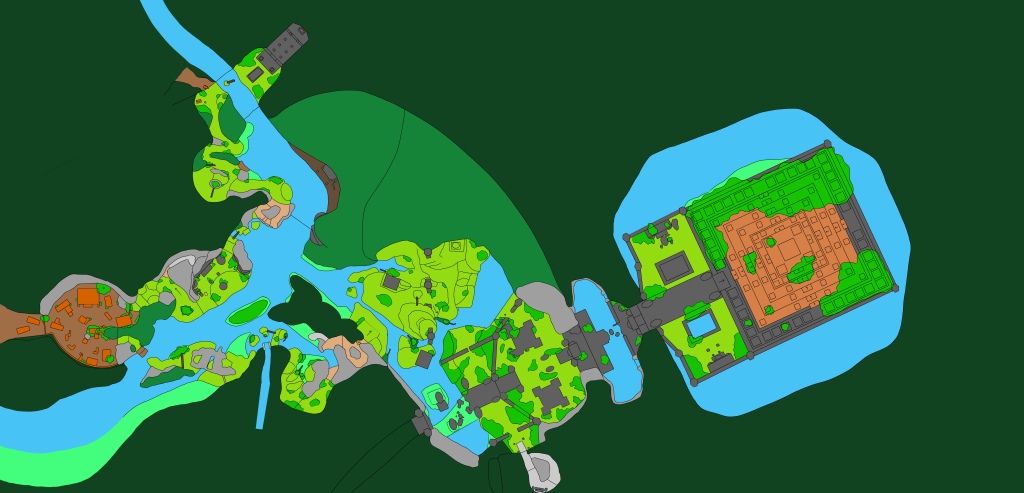
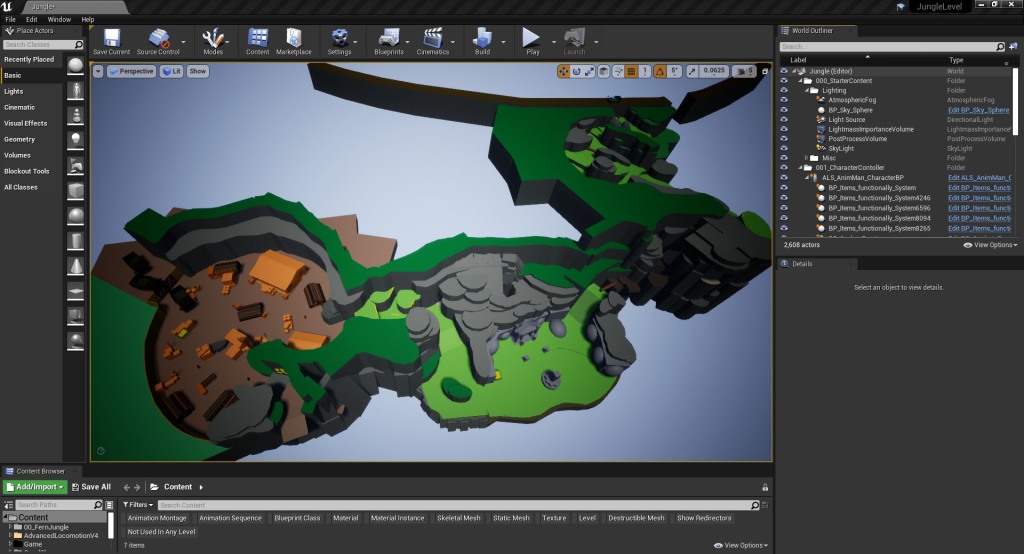
For this final module, I will be creating a fully playable level block out while also researching ways to intuitively guide players through spaces.
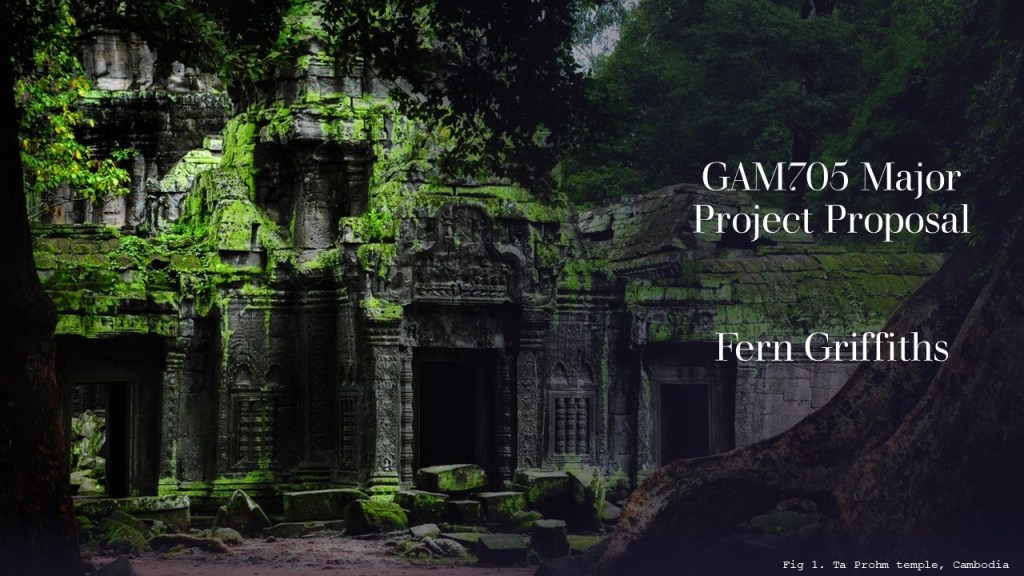
Overview

Over the course of this presentation, I will show my plan for the development and creation of this project, starting with looking at what my project is.
Project Outline

The question I will be answering is “How can level design utilise cognitive mapping to intuitively guide players in a non-intrusive way?”
Cognitive mapping is the way in which we interpret and navigate the world around us with the term being coined by Edward Tolman in 1948. It refers to a person’s knowledge about their surroundings as a result of trying to organise and simplify the world around them.
Cognitive mapping isn’t just usable in the real world but can also be a vital tool that players use to navigate and understand game spaces. If used correctly it allows players to develop a feeling of mastery over space, preventing feelings of confusion or frustration.
Games today rely quite heavily on UI to guide the player, either in the forms of a mini-map, heads-up displays or some form of way pointing system. These are all forms of non-diegetic UI which can cause players to become too focused on following the mini-map or waypoints, resulting in them becoming disengaged from the environment as they’re exploring the UI and not the level. Removing non-diegetic UI often leads to more engagement in the game world with studies showing that removing it results in more enjoyable experiences.
What will I create?

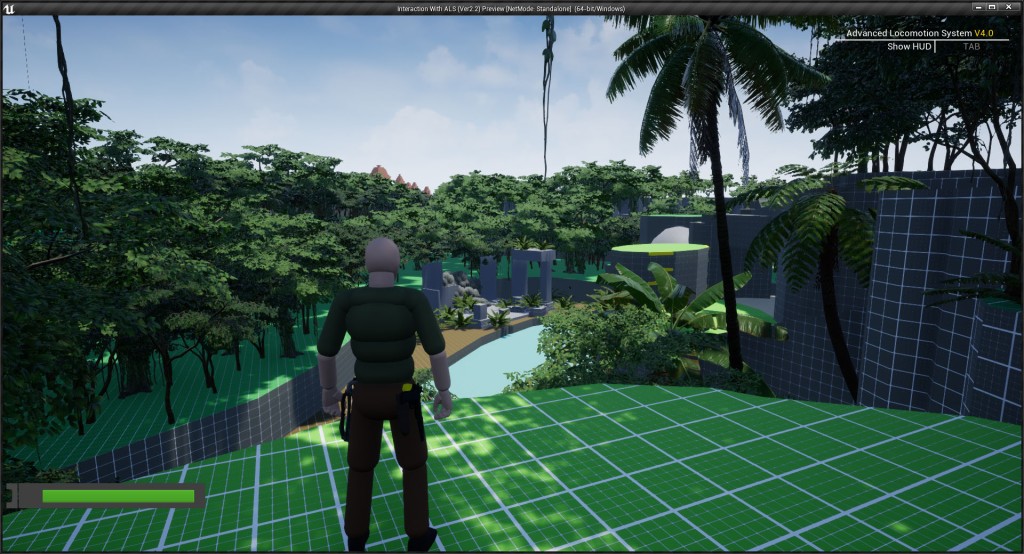
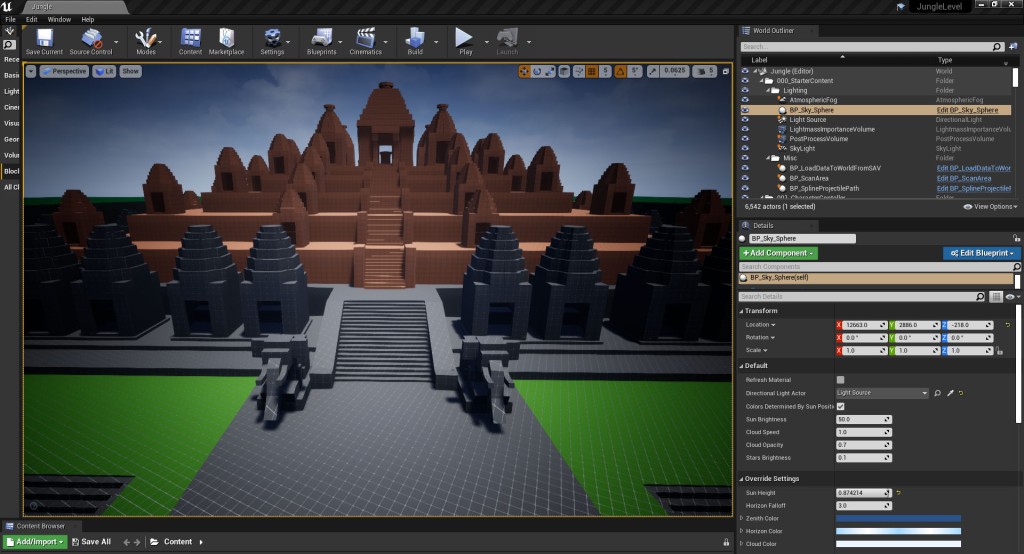
So, what will I physically be creating for this project? Using the unreal engine and the Advanced Locomotion System adapted by Jakub W available from their Patreon I will create a fully playable third-person linear level blockout that fits within the action/adventure genre.
Using the Advanced Locomotion System, I will be able to develop a level that features both traversal and combat as the majority of the mechanics have already been developed allowing me to focus on the level design.
With the aim of this project being to use cognitive mapping to guide the player, the level will not feature any navigational UI and will rely on the environment intuitively guiding the player.
Inspiration – Films
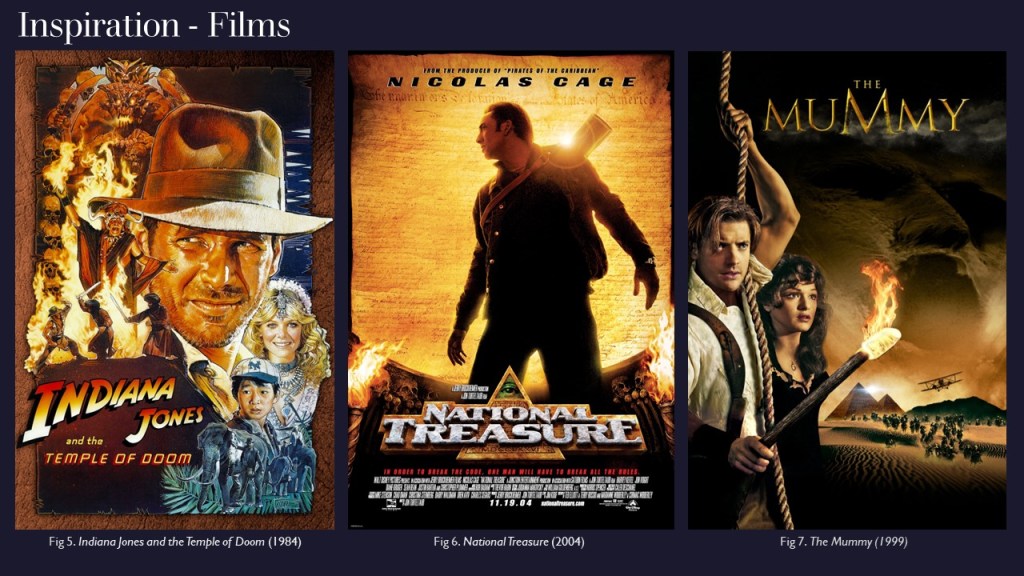
The inspiration for the project came from growing up watching action/adventure films like Indiana Jones, National Treasure, and The Mummy.
Inspiration – Games
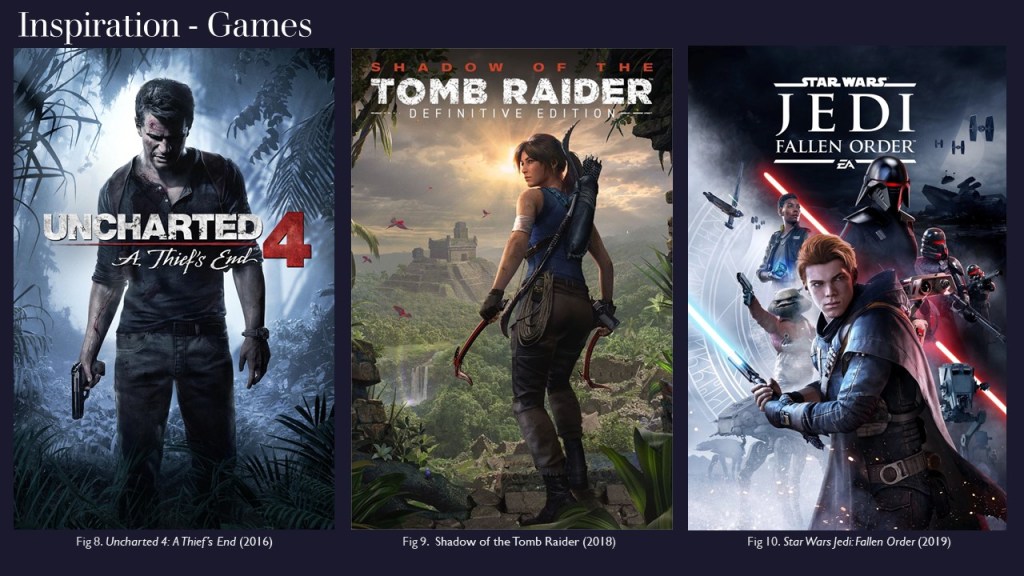
When I started playing games I was instantly drawn to games like Uncharted, Tomb Raider and Star Wars Jedi: Fallen Order where the characters explore ancient civilisations and search for lost treasure.
Inspiration – Cambodia Mood Board

Knowing I wanted to capture the feeling of being a brave explorer on the search for long-forgotten places and treasures, I started looking for inspiration for the setting. It was during this time I came across the ruins and forgotten temples of Cambodia.
I felt this location, of ancient temples surrounded by a wild jungle worked well as a setting and would enable me to capture the desired player experience of being a courageous adventurer who can overcome anything.
Inspiration – Why Cambodia?

Cambodia has a rich culture, formed from a melting pot of influences from ancient civilizations such as the Khmer Empire to religions, such as Hinduism and Buddhism. It is this rich history and a mixture of architectural styles that I feel makes Cambodia a visually and narratively interesting source of inspiration for an action/adventure-inspired level.
Audience

While I am mainly creating this project as a portfolio piece for myself it will also appeal to others.
A large variety of people play video games, mostly between the ages of 20 and 50 so this project will appeal to those players who enjoy the action/adventure genre. As this project aims to remove navigational UI it will also appeal to gamers who want a more immersive experience. As the gameplay features combat typical of the action/adventure genre the age rating will be PEGI 16, with this age rating being based on games with similar gameplay.
With this project being underpinned by research relating to guiding the player through cognitive mapping this project will also appeal to students and level designers looking to achieve a similar result within their own levels.
Plan and Stretch Goals

To make sure that my project is achievable I broke the project down into miles stone. As we are currently in week 4 my next steps will be to finalise the Level Design Document to begin blocking out the level at the beginning of week 5. I will then hold two playtesting sessions in weeks 8 and 10 to gather feedback from play testers which I will use to iterate on the level design. The plan is to spend week 11 bug fixing and adding final touches with week 12 being used to prepare for submitting and the viva in week 13, making sure that the project packages properly without any issues.
If the project is running smoothly the plan is to create a second level, though this is currently only a stretch goal as I don’t want to over-scope the project. If I am in the position to create a second, related level then I will start creating the Level Design Doc in week 6 and be ready to play test this second level alongside the first level in week 9. If creating a full second level is not feasible I will expand on the first level instead to create a longer experience for players.
Potential Issues
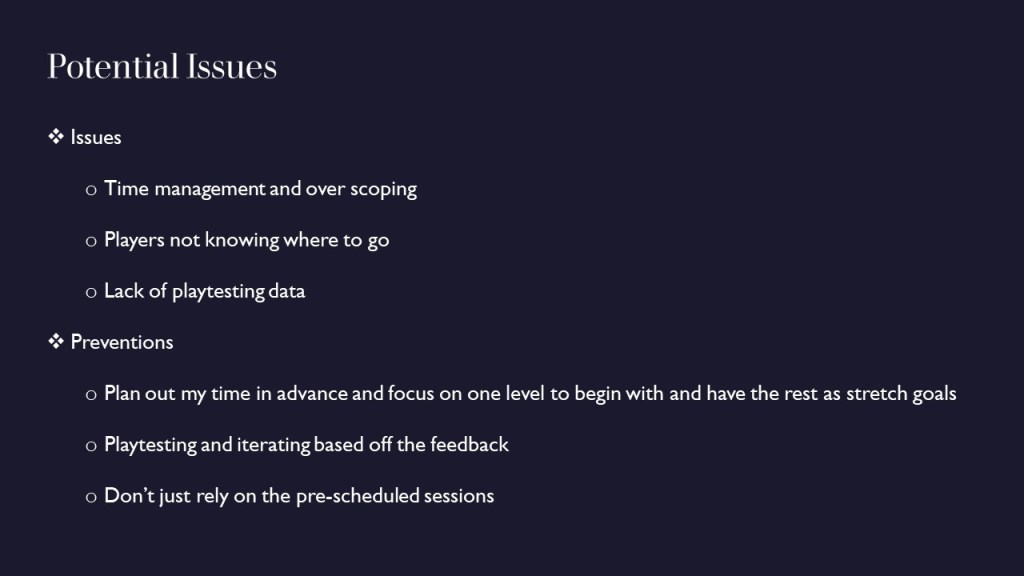
The biggest things that could go wrong are poor time management, players not knowing where to go and a lack of playtesting data. Due to health issues, I am currently having to work from home which could make gathering playtesting data difficult.
To minimise the risk of poor time management I have planned my time out and will use miles stones and stretch goals to prevent over-scoping. To ensure that I am successfully utilising cognitive mapping to intuitively guide players I will hold playtesting sessions to gather feedback. Playtesting will be a vital part of knowing whether this project is successful, so to make sure that I have enough data to be useable I won’t just rely on the pre-scheduled sessions.
Summary

In summary, I will be undertaking a level design project focusing on using cognitive mapping to guide the player intuitively. The finished artefact will take the form of a playable third-person action/adventure game, inspired by the history and architecture of Cambodia’s Temples and ruins. The initial goal is to create a single level but a stretch goal of two levels if the time allows.

“All men dream – but not equally. Those who dream by night, in the dusty recesses of their minds, wake in the day to find that it was vanity… But the dreamers of the day are dangerous men, for they may act their dream with open eyes, to make it possible. This I did.”
T. E. Lawrence’s Seven Pillars of Wisdom
References:
CLEMENT, J. 2021. ‘UK Gaming by Age and Gender 2021’. Available at: https://www.statista.com/statistics/300513/gaming-by-demographic-group-uk/. [Accessed 18th June 2022].
CHUNG, Brendon. 2015. “Level Design in a Day: Wayfinding & Storytelling Techniques” GDC Vault [Video Online]. Available at: https://www.gdcvault.com/play/1022117/Level-Design-in-a-Day [Accessed 30th May 2022]
IACOVIDES, I., A., L. COX, R. KENNEDY, & C. JENNETT. 2015. Removing the HUD: The impact of non-diegetic game elements and expertise on player involvement. CHI PLAY ’15 Proceedings of the 2015 Annual Symposium on Computer-Human Interaction in Play. New York, NY, USA: ACM
JAKUB W PATREON. 2021. “Interaction With ALS – Version 2.2 (Project Files – Only 4.26) + Info” Patreon [online] Available at: https://www.patreon.com/posts/interaction-with-64514658 [Accessed 10th June 2022]
LYNCH, Kevin. 1975. The Image of the City. Cambridge,Mass: Massachusetts Institute of Technology.
RYAN, Adam. 2020. “Ghost of Tsushima is Right, Waypoints in Gaming Needs to get in the Bin.” Well Played [online] Available at: https://www.well-played.com.au/ghost-of-tsushima-is-right-waypoints-in-gaming-need-to-get-in-the-bin/ [Accessed 18th Jun22].
SHAVER, David. 2018. “Invisible Intuition: Blockmesh and Lighting Tips to Guide Players and Set the Mood” GDC Vault [Video Online]. Available at: https://www.gdcvault.com/play/1025179/Level-Design-Workshop-Invisible-Intuition [Accessed 18th June 2022].
TOLMAN, Edward. C. 1948. “Cognitive maps in rats and men.“ Psychological Review. 55(4): 189-208
Figures:
Figures 1: Ta Prohm temple, Cambodia [Photo]
Figure 2: Angkor Wat temple, Cambodia [Photo]
Figures 3: LYNCH, Kevin. 1975. “Figure 35” from The Image of the City. Cambridge,Mass: Massachusetts Institute of Technology.
Figures 4: SCHATS, E. 2021. “Level Blockout from Uncharted 4: A Thief’s End” ArtStation [Online]. Available at: https://www.artstation.com/artwork/L38yyv [Accessed 20th June 2022]
Figures 5: SPIELBERG, Steven. 1984. Indiana Jones and the Temple of Doom [Film]
Figures 6: TURTELTAUB, Jon. 2004. National Treasure [Film]
Figures 7: SOMMERS, Stephen. 1999. The Mummy. [Film]
Figures 8: Uncharted 4: A Thief’s End. 2016. Naughty Dog, Sony Interactive Entertainment.
Figures 9: Tomb Raider: Shadow of the Tomb Raider. 2018. Crystal Dynamics, Square Enix.
Figures 10: Star Wars Jedi: Fallen Order. 2019. Respawn Entertainment, EA
Figures 11: Mood Board about Cambodia. Various dates. Pinterest.
Figures 12: Khmer Empire Architecture, Angkor Wat temple, Cambodia [Photo]
Figures 13: French Colonial Architecture, Phnom Penh, Cambodia [Photo]
Figures 14: New Khmer Architecture, Chaktomuk Conference Hall, Cambodia [Photo]
Figures 15: Buddha Statue, Angkor Wat temple, Cambodia
Figures 16: Phmom Penh temple, Cambodia
Figures 17: Face Towers of Bayon, Angkor Wat temple, Cambodia
Games:
Dead Rising 3. 2013. Capcom Vancouver, Microsoft Studios
Star Wars Jedi: Fallen Order. 2019. Respawn Entertainment, EA
Tomb Raider. 2013. Crystal Dynamics, Square Enix.
Tomb Raider: Rise of the Tomb Raider. 2015. Crystal Dynamics, Square Enix.
Tomb Raider: Shadow of the Tomb Raider. 2018. Crystal Dynamics, Square Enix.
Uncharted: Drake’s Fortune. 2007. Naughty Dog, Sony Interactive Entertainment.
Uncharted 2: Among Thieves. 2009. Naughty Dog, Sony Interactive Entertainment.
Uncharted 3: Drake’s Deception. 2011. Naughty Dog, Sony Interactive Entertainment.
Uncharted 4: A Thief’s End. 2016. Naughty Dog, Sony Interactive Entertainment.
Uncharted: The Lost Legacy. 2017. Naughty Dog, Sony Interactive Entertainment.
Films:
SOMMERS, Stephen. 1999. The Mummy. [Film]
SPIELBERG, Steven. 1984. Indiana Jones and the Temple of Doom [Film]
TURTELTAUB, Jon. 2004. National Treasure [Film]
 Fern Griffiths
Leave a comment